Voice of Farmers
Preserving the Mikekado Pumpkin
and Its History
for Future Generations
Mikekado Pumpkin
The Mikekado Pumpkin is grown in Buzen City, Fukuoka Prefecture. Introduced to Japan in
the mid-16th century, it is known to be the country's oldest pumpkin. Japanese pumpkins
are different than the western varieties prevalent on the market. For one, they are
resistant to hot and humid weather conditions.
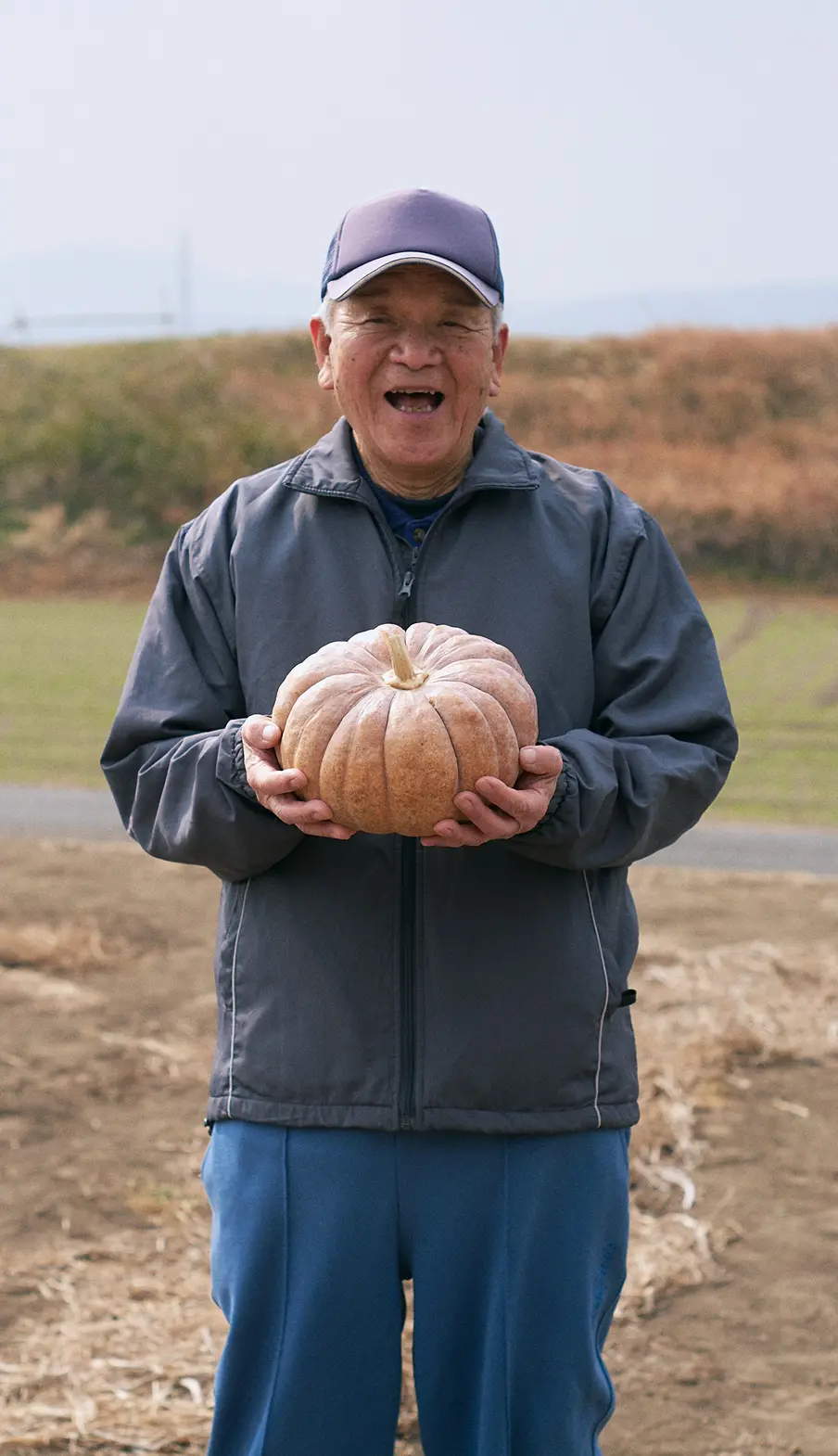
Pictured here is Nobuhiro Nekota, Chair of the Mikekado Pumpkin Preservation Society, in the
field where Mikekado pumpkins were grown for presentation to Emperor Showa at the 1928 Daijosai
(Great Thanksgiving Rite).
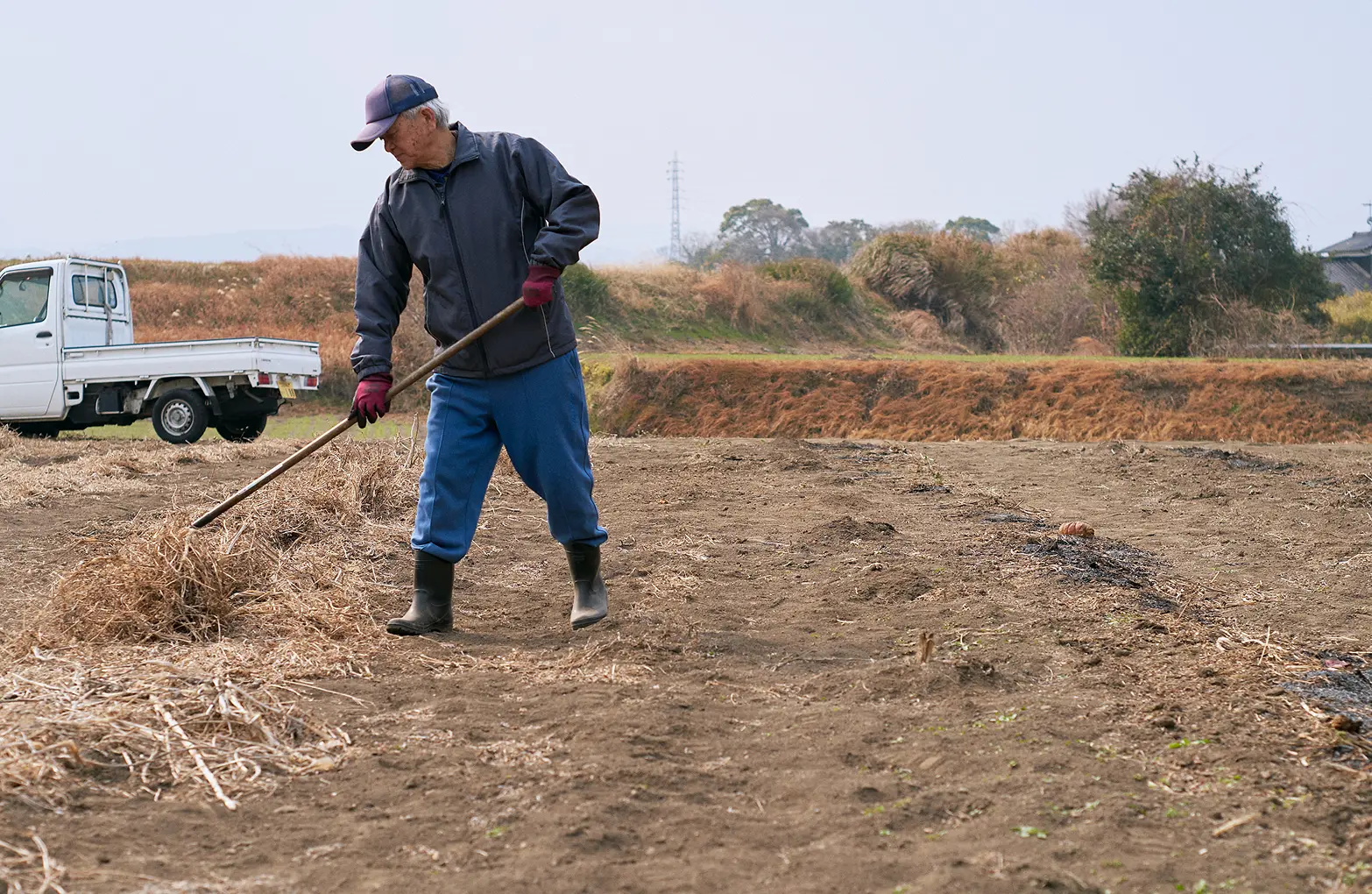
Buzen City, Fukuoka Prefecture, situated right on the border with Oita Prefecture, is home to a traditional vegetable that has been designated as a Cultural Property by the national government: Japan's oldest variety of pumpkin, the Mikekado Pumpkin. The history of this designation goes back many years. "I don't think any vegetable is quite as special as this pumpkin," says Preservation Society Chair Nekota with pride.
Pumpkins That Supported Life in the Local Community
Pumpkins are said to have first arrived in Japan around 1540, when Portuguese missionaries
arrived by ship and presented them to Otomo Sorin, the lord of Bungo Province (which
occupied most of modern-day Oita Prefecture). The shogun Ogata Shigemori from the village
of Mikekado in Buzen Province (part of modern-day Fukuoka Prefecture) brought some
pumpkins back to his domain and began cultivating them, which is the origin of the
Mikekado Pumpkin we have today.
"Ever since then, we have cultivated the Mikekado Pumpkin in this region," says Nekota. "It's
a remarkably strong pumpkin—even if I just dropped some seeds beside the asphalt on the side
of the road there, they would sprout. During the droughts and famines of the Edo Period, they
helped sustain local communities as an essential food source. Generally speaking, they have
only been grown on a small scale—not in high enough volumes for shipping to other regions—and
been consumed right here in the local market. However, records state that, during the Meiji
Period, production volumes were very high and some of the crop was shipped off to the nearby
Tagawa coal mine*. So, at that time, Mikekado Pumpkins fed the coal miners working out there."
Later on, the opening of a silk mill in the area caused increasing numbers of farmers to
cultivate mulberry, which serves as feed for silkworms, and production of the pumpkin
declined markedly. Regardless, these pumpkins helped people in Mikekado survive food
shortages during and following World War II.
"When I was a kid, we ate pumpkin for three meals a day, so I came to hate it. Even after growing
up, I couldn't bring myself to eat it very often," chuckles Nekota, who turns 85 this year.
"But when I started to grow pumpkins myself, I tried it for the first time in years, and found
it to be quite tasty. Over its long history, our Mikekado Pumpkin has helped people overcome
a lot of tough times. They're real life savers."
The Importance of Learning the History First, and Then Growing and Consuming
This pumpkin has another interesting story. In 1928, a Mikekado Pumpkin was presented as a
gift, representing this unique local product, to the Showa Emperor at the Daijosai Rite.
The same field where that pumpkin was once grown, is still used every year by third-grade
students at Mikekado Elementary School to grow pumpkins.
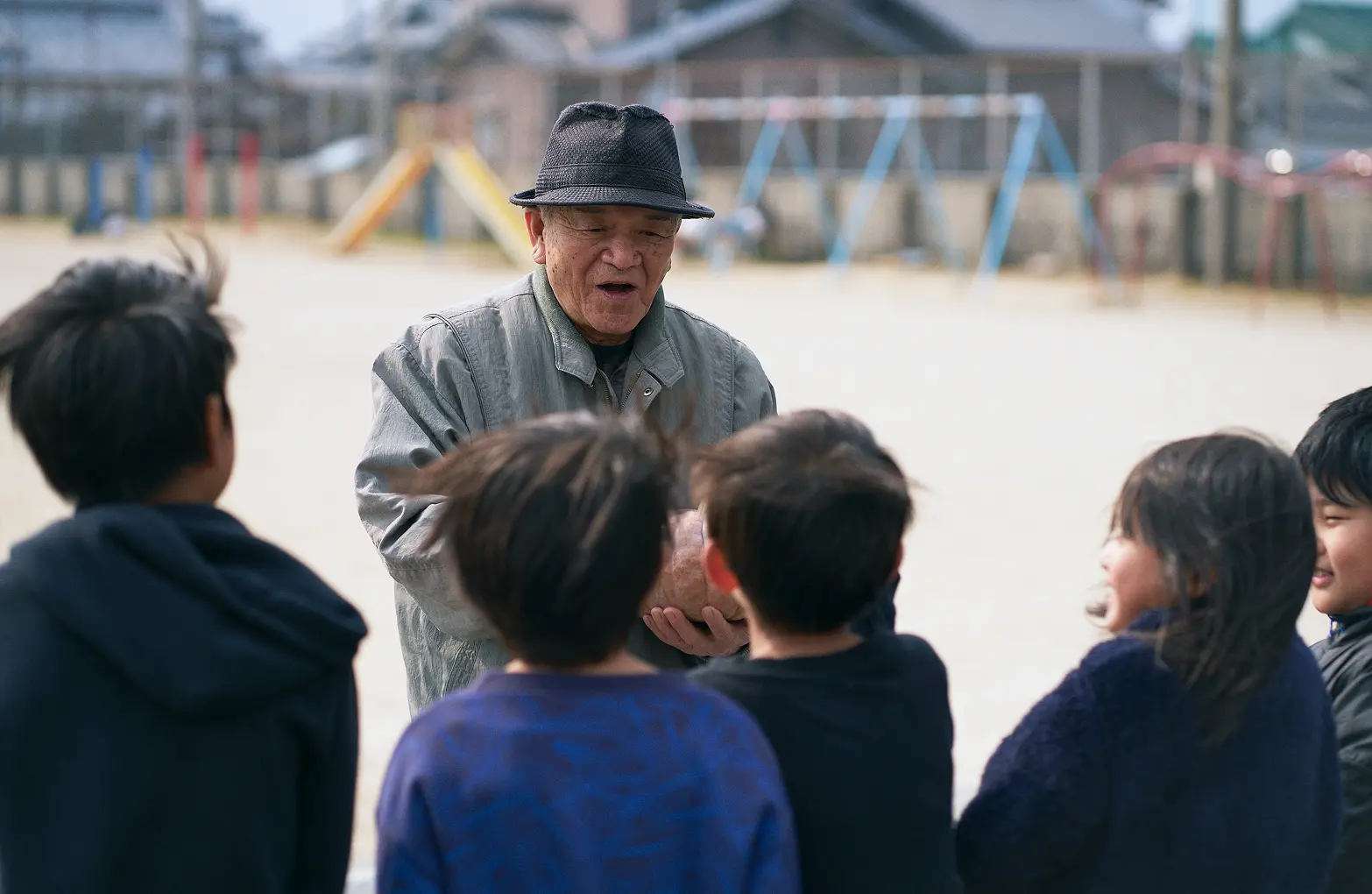
"Every year, I put on a kamishibai [a form of Japanese storytelling using illustrations] for
Mikekado Elementary School third graders explaining the history of the Mikekado Pumpkin," explains
Nekota. "After learning about the significance of this vegetable, the kids try growing and harvesting
it for themselves, then cook and eat the resulting produce. I think that providing these experiences
for young kids is the best means of keeping this traditional vegetable around for future generations."
The Distinctive Appearance is the Hallmark of the Mikekado Pumpkin
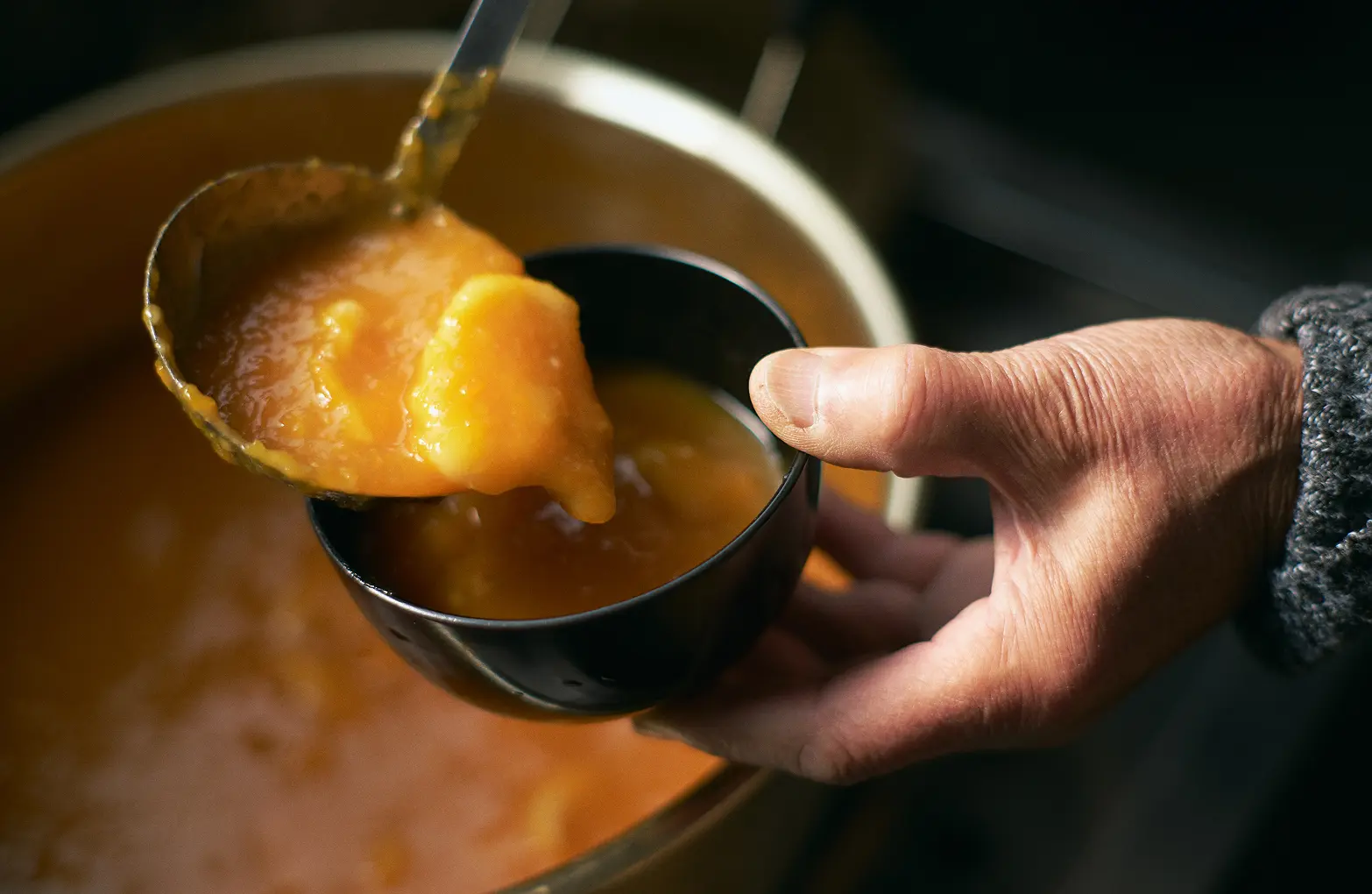
The perfect local dish for this traditional pumpkin is dango-jiru, traditonal dumpling
soup. You start by skinning Mikekado Pumpkin, boiling it down into a porridge-like soup,
flavoring it with sugar and salt, then adding in kneaded-flour dumplings. The result is a
vivid-yellow soup, like a yellow sweet red-bean soup.
"Back in my day, people ate this dish at home all the time, but now fewer people make it. The
Mikekado Pumpkin Preservation Society holds seasonal events, and uses these as opportunities
to serve pumpkin dango-jiru to visitors from both near and far," says Nekota.
One of the Preservation Society's regular events is a contest to determine the year's best
Mikekado Pumpkin crop. Everyone who grows the pumpkins is eligible to submit an entry. The
judges include Preservation Society members as well as workers from government
institutions such as city hall and the Fukuoka Office of Agriculture and Forestry, Japan
Agricultural Cooperatives (JA) members, and others.
As Nekota describes it, "The contest is, in part, held for purposes of preserving the Mikekado
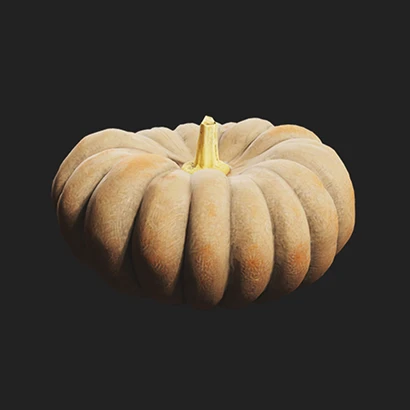
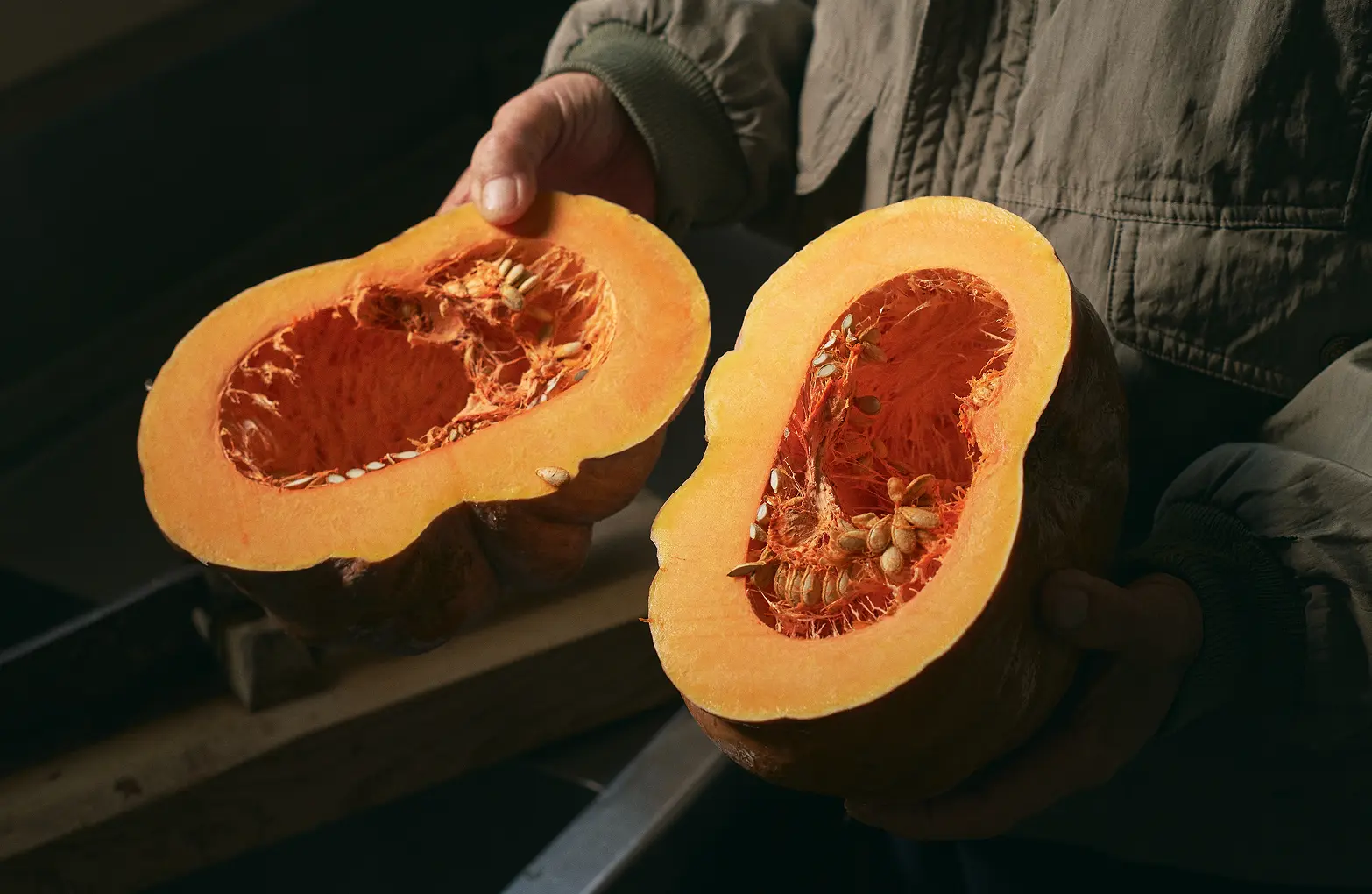
Pumpkin as a vegetable. Each pumpkin is carefully judged based on the quality of its chrysanthemum-shaped
form, the amount of white particles that slowly rise up and stick in response to heating, the
shape of the pentagonal stem, its size and weight, and other such distinctive features."
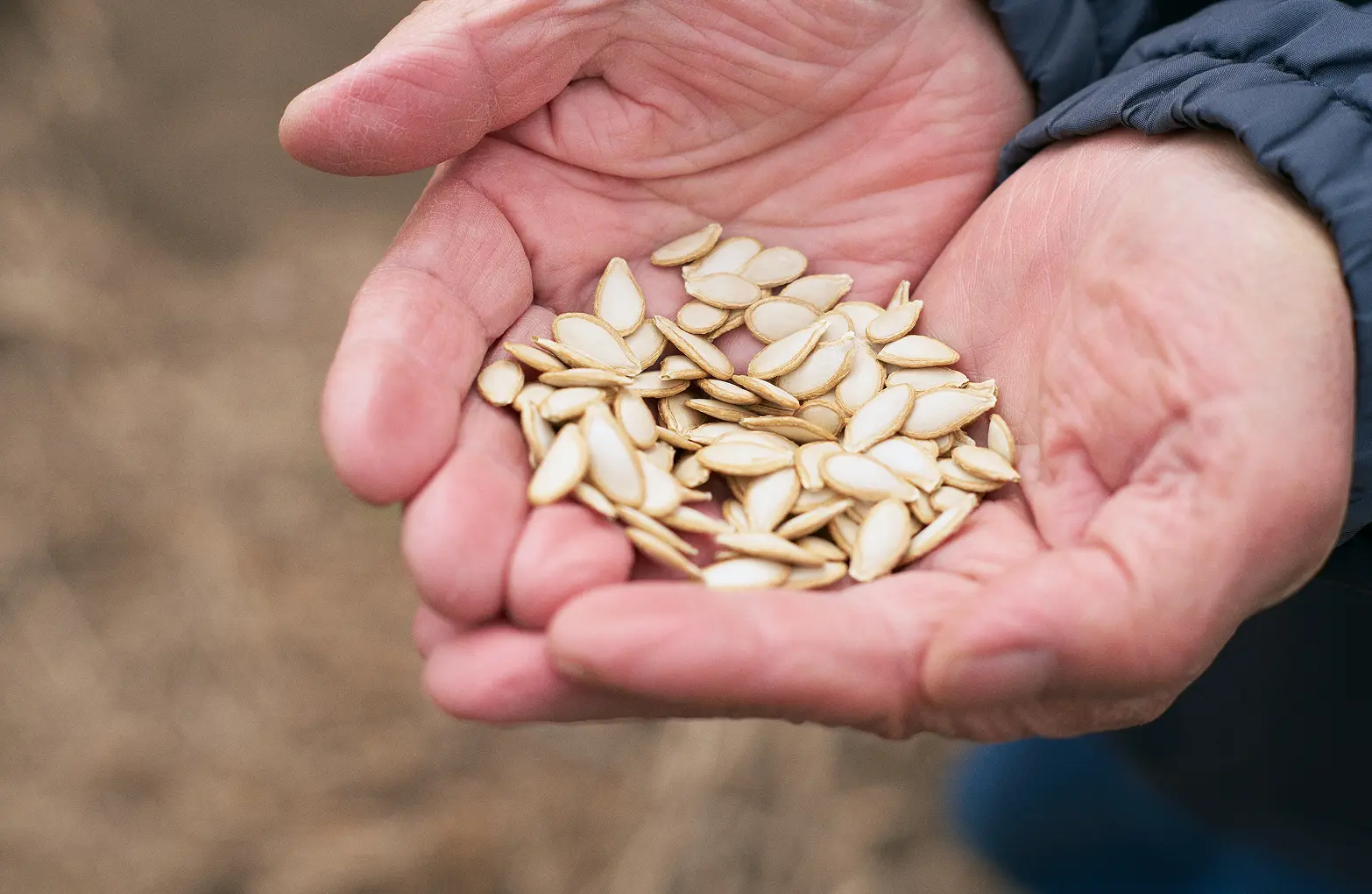
We asked Nekota if there is any restriction on production location, to which he responded, "No
matter where you grow it, the Mikekado Pumpkin can easily be recognized by its appearance. If
someone is interested in keeping this pumpkin variety alive and continuing to grow it over the
coming years, we're happy to provide them with some of our seeds, even if they don't live in
Mikekado."
Preserving the Mikekado Pumpkin Tradition While Continuing to Evolve
There is a region that is already growing this pumpkin using seeds provided by Mikekado:
Usuki City, Oita Prefecture. Explains Nekota, "These pumpkins originally came from Oita to
Mikekado, so this development is like a homecoming for the vegetable. Oita had stopped
growing the crop, but they wanted to bring it back. To this end, Usuki City asked for us
to send some of our seeds. Now, they're being grown under the name Sorin Pumpkins."
Just as these pumpkins came from Oita to Fukuoka's Mikekado, then went back to Oita later, many
heirloom crops across Japan have migrated to other places for continued cultivation. New stories
are woven in various places, while in others, history continues to build as it always has—all
passed on into the future.
"Recently, a lot of young people are stepping up to grow the Mikekado Pumpkin. Moreover, the
Preservation Society is developing products such as Mikekado Pumpkin shochu liquor and ice cream
to expand the consumer market base," says Nekota. "Agriculture as an industry is continually
changing. The Mikekado Pumpkin has always been grown in outdoor fields. In the future, however,
they may be grown in greenhouses, too. There may be new agricultural technologies involved.
By continuing to pursue such changes and advances while faithfully passing down the Mikekado
Pumpkin's history of more than 450 years, we can preserve this vegetable, which is truly a treasure
of Mikekado. That's what I think, at least."
The Mitsui Tagawa Coal Mine formerly operated in Tagawa City, Fukuoka Prefecture. It was an important source of coal from the late 19th century until the mid-20th century and closed down in 1964.
Interview&Text / Sachiko Kawase
Photo / Yuta Nishida

Farmer
Nobuhiro Nekota
Nekota was born in Yahata (now part of Kitakyushu City), Fukuoka Prefecture in 1941.
Following his graduation from university, he worked as a junior high school teacher at
various schools around the prefecture, staying primarily in the Kitakyushu area. After
serving in roles including school principal and a position on the Board of Education, he
retired from education at the usual age, then went on to become director of the Mikekado
Community Center in Buzen City.
As part of regional revitalization efforts, he works to preserve and promote the Mikekado Pumpkin.
Currently, Nekota grows his own Mikekado Pumpkins while serving as chair of the Mikekado Pumpkin
Preservation Society. In this role, he actively works on a wide range of initiatives, from passing
the tradition on to local children to developing Mikekado Pumpkin products.
References
warmerwarmer, Beautiful Vegetables of Japan (Orange Page); Takashi Aoba, Lineages of Native Vegetables (Hosei University Press); Nobuhiro Nekota, The Mikekado Pumpkin: Past and Present (Mikekado Pumpkin Preservation Society); Mitsubishi Shoji Agri-Service MJ, Vol. 638; History of Mikekado Village (Chikujo Public Relations Association); “Japan’s Oldest Pumpkin: The Mikekado Pumpkin,” Crossroad Fukuoka; “Making Dumpling Soup and Lunch Using Mikekado Pumpkin,” Buzen Mitaiken; Fukuoka Prefecture Council, Regional Revitalization Network.
Share this page


