Voice of Farmers
Miraculous Recovery: Popularizing the Delicious Flavor of Sadowara Eggplant Throughout Japan
Sadowara Eggplant
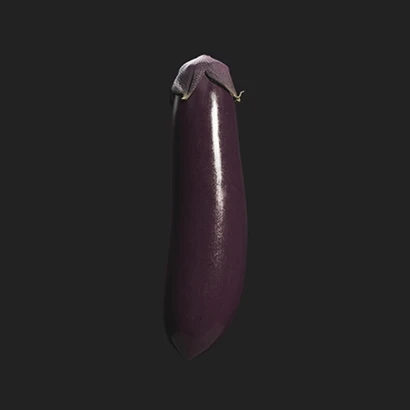
The Sadowara Eggplant is a traditional vegetable that has been cultivated since the Edo
Period (1603–1868) in Sadowara-cho, a former town that is now part of northern Miyazaki
City, Miyazaki Prefecture. It has an apple-like flavor and can even be eaten raw. When
heated up during cooking, it exhibits a singularly melty-soft texture.
This eggplant disappeared from the market around 1980, but in 2000, four eggplant seeds that
had been preserved over the years germinated. Their stalks continued to grow, and by 2002, the
plants had multiplied and growers were able to reintroduce the vegetable to the market.
The Miyazaki City Sadowara Eggplant Growers’ Association was founded in 2005. It has 11 farmers
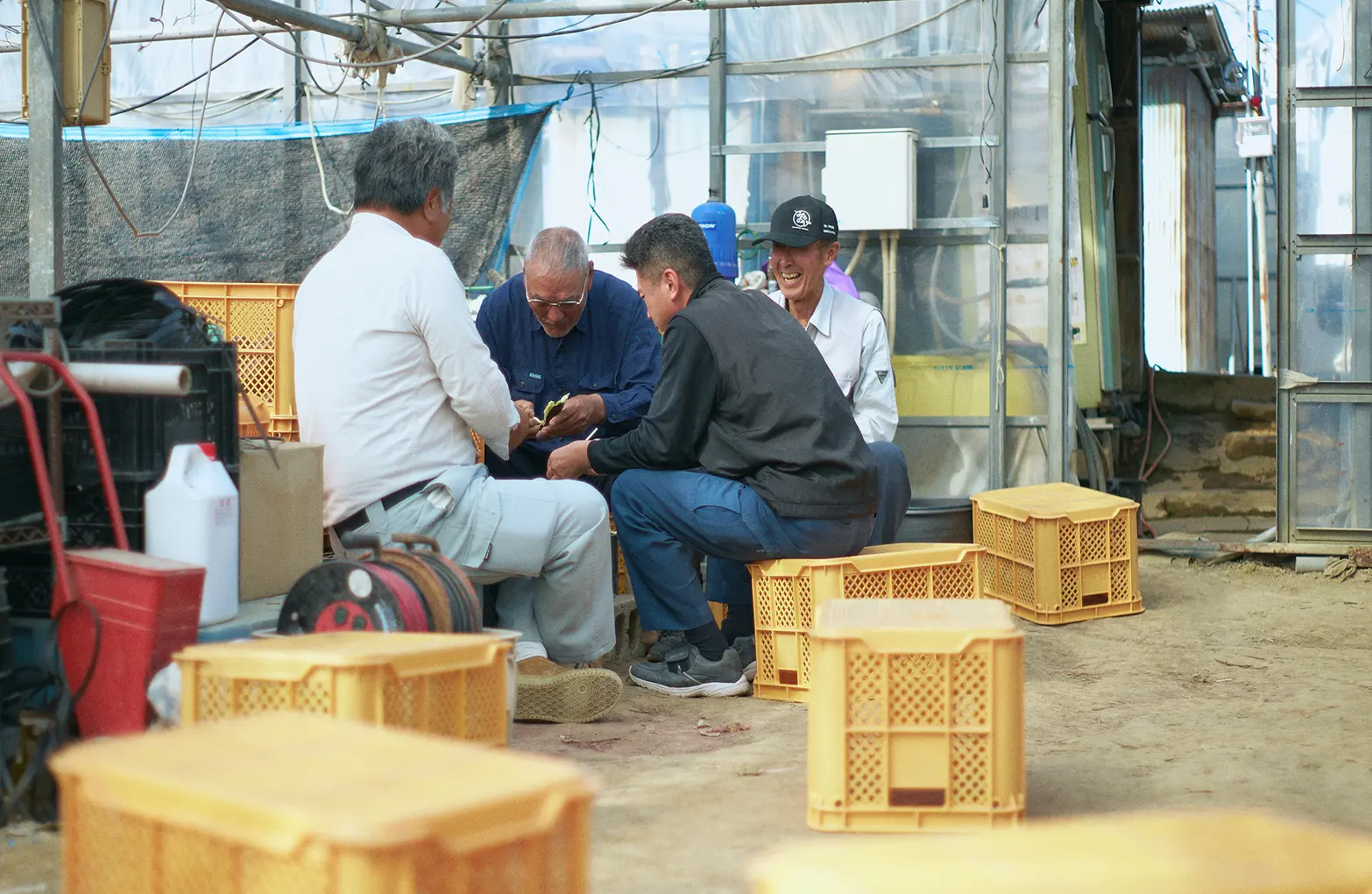
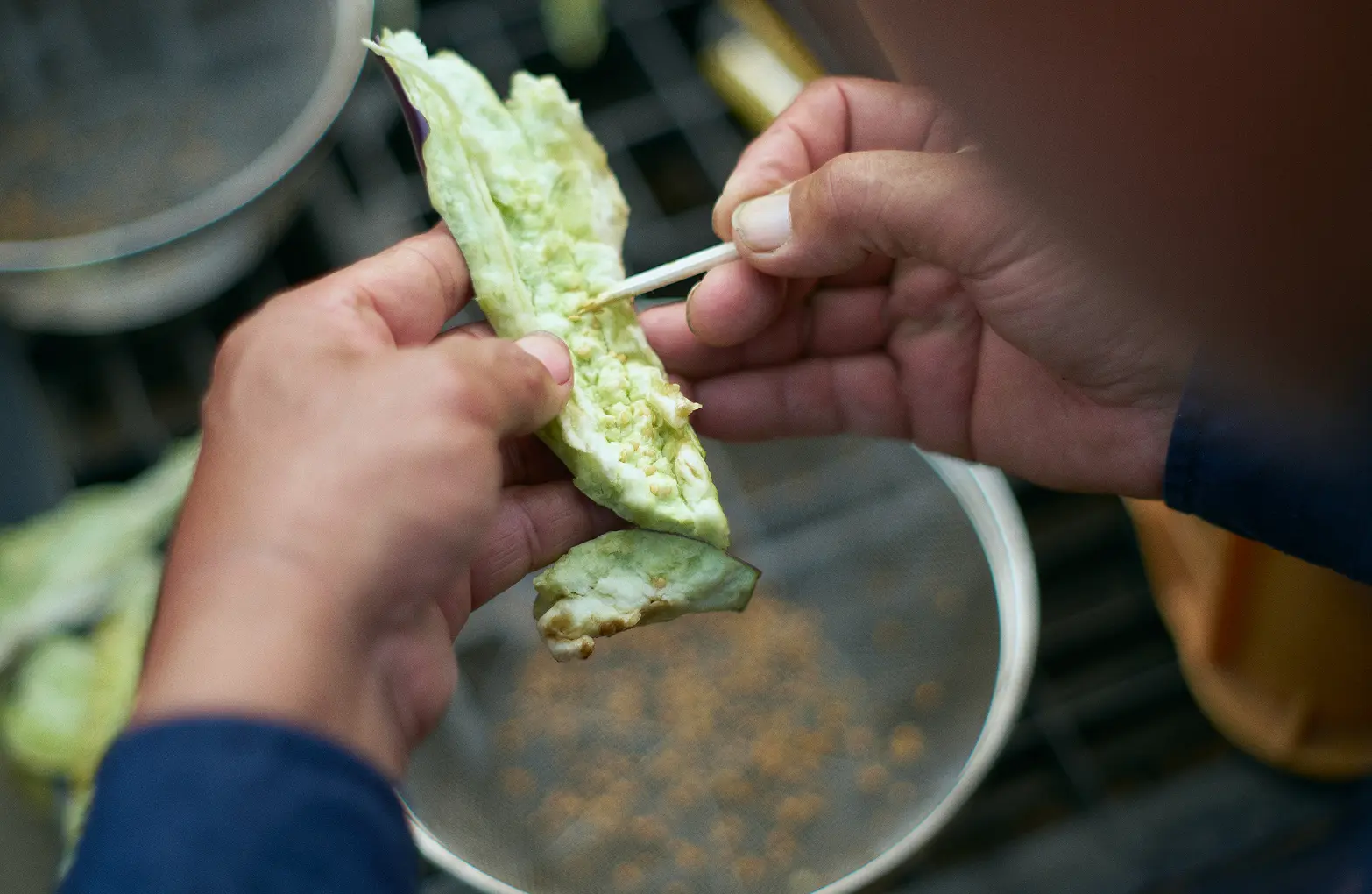
as members, who preserve the eggplant by cultivating the vegetable and harvesting its seeds
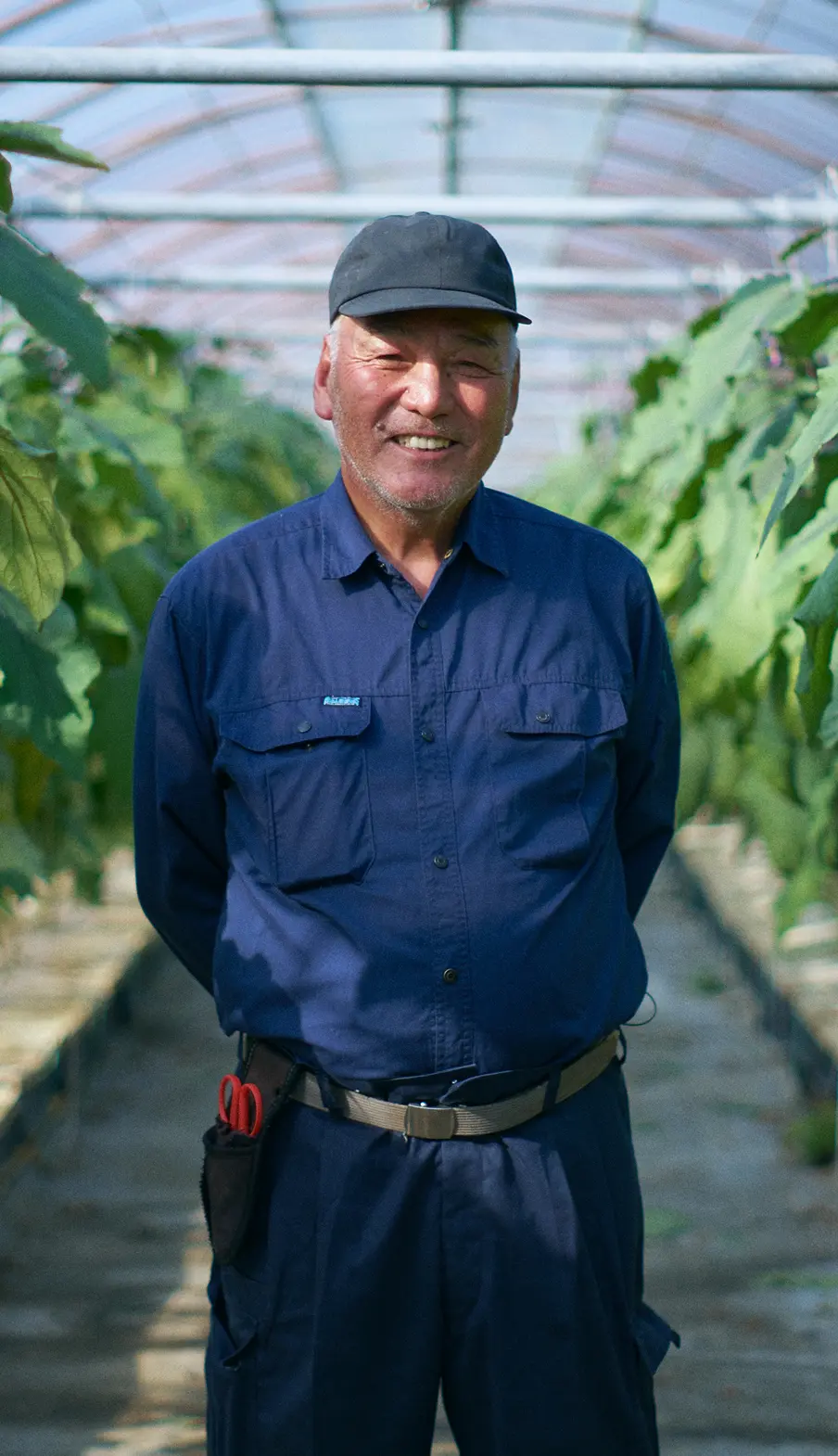
at home. Koichi Saito, who is the chair of the Growers’ Association, grows Sadowara Eggplant
year-round in his greenhouse facilities.
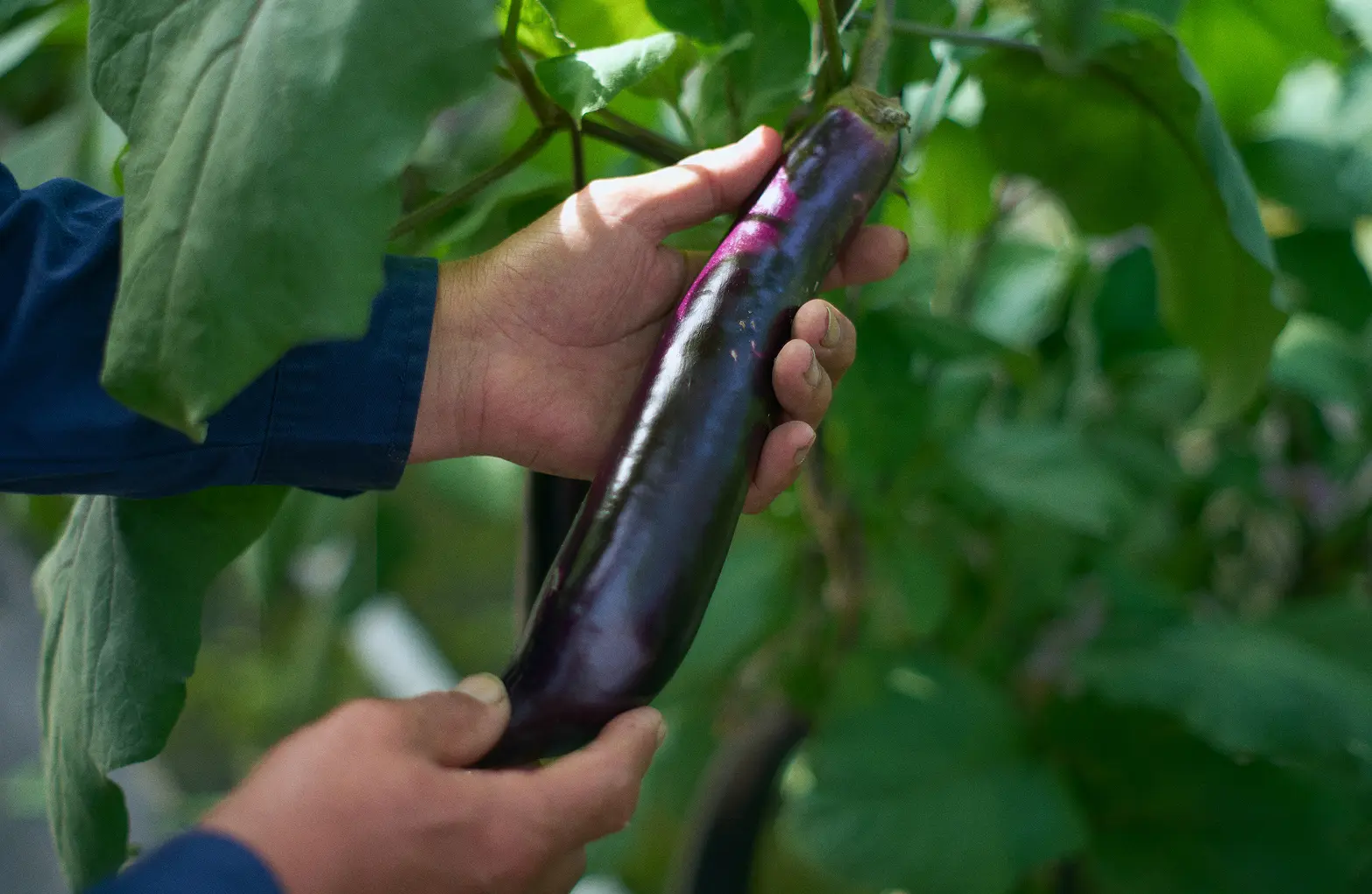
These large eggplants can be found in supermarkets across Miyazaki City, standing out
prominently among other vegetables in the produce area. Its size is enough to make the
eggplant conspicuous, but even more dramatic are the words printed on the packaging: "A
Miyazaki traditional vegetable revived from just four seeds."
These are the Sadowara Eggplant shipped to market by the Miyazaki City Sadowara Eggplant Growers’
Association made up of agricultural producers. They have a soft, almost creamy texture inside
and unique flavor. According to one restaurant owner in Miyazaki, "Once you eat a Sadowara Eggplant,
you won't be able to have any other kind!"
The Growers' Association Started by One Farmer Who Helped Revive the Sadowara Eggplant
"Today, virtually everyone in Miyazaki knows about the Sadowara Eggplant. At first,
however, the people who brought it back faced some tough challenges. It's thanks to their
hard work that we've been able to come this far." So says Koichi Saito, who is a Sadowara
Eggplant farmer and current chair of the Miyazaki City Sadowara Eggplant Grower's
Association.
The eggplant was originally cultivated starting in the Edo Period in the castle town of Sadowara,
which is now a northern district in modern-day Miyazaki City, Miyazaki Prefecture. Back then,
farmers experienced inconsistency in size and coloring, and this particular variety had weak
resistance to diseases and was easily bruised due to its pliant skin. Later on, during the post–World
War II era of rapid economic growth, Sadowara Eggplant was overtaken by improved varieties offering
more consistent coloring and size along with higher yield rates. Numbers of growers continued
to dwindle until this particular eggplant disappear from the market around 1980. Then, in the
year 2000, something unbelievable happened—starting with just four seeds. An employee of the
Miyazaki Agricultural Experiment Station planted some seeds that had been given to them, and
although many failed to germinate, four of them did. Two years later, the number of plants had
increased to thirty-five. Large-scale production toward shipment finally seemed within reach—but
things did not go so smoothly.
Thinking back on that time, Saito explains, "Initially, the eggplant didn't look very appealing
as products, which made it hard to find growers. Despite working so hard to bring this vegetable
back, when they tried selling them at the market, vendors would only buy them for tens of yen
apiece, making them completely unprofitable. Amid such circumstances, the person who continued
growing the eggplant alone while also cultivating cucumbers, tomatoes and other crops which
sold reliably, was Haruhide Toyama, the first chair of the Grower's Association."
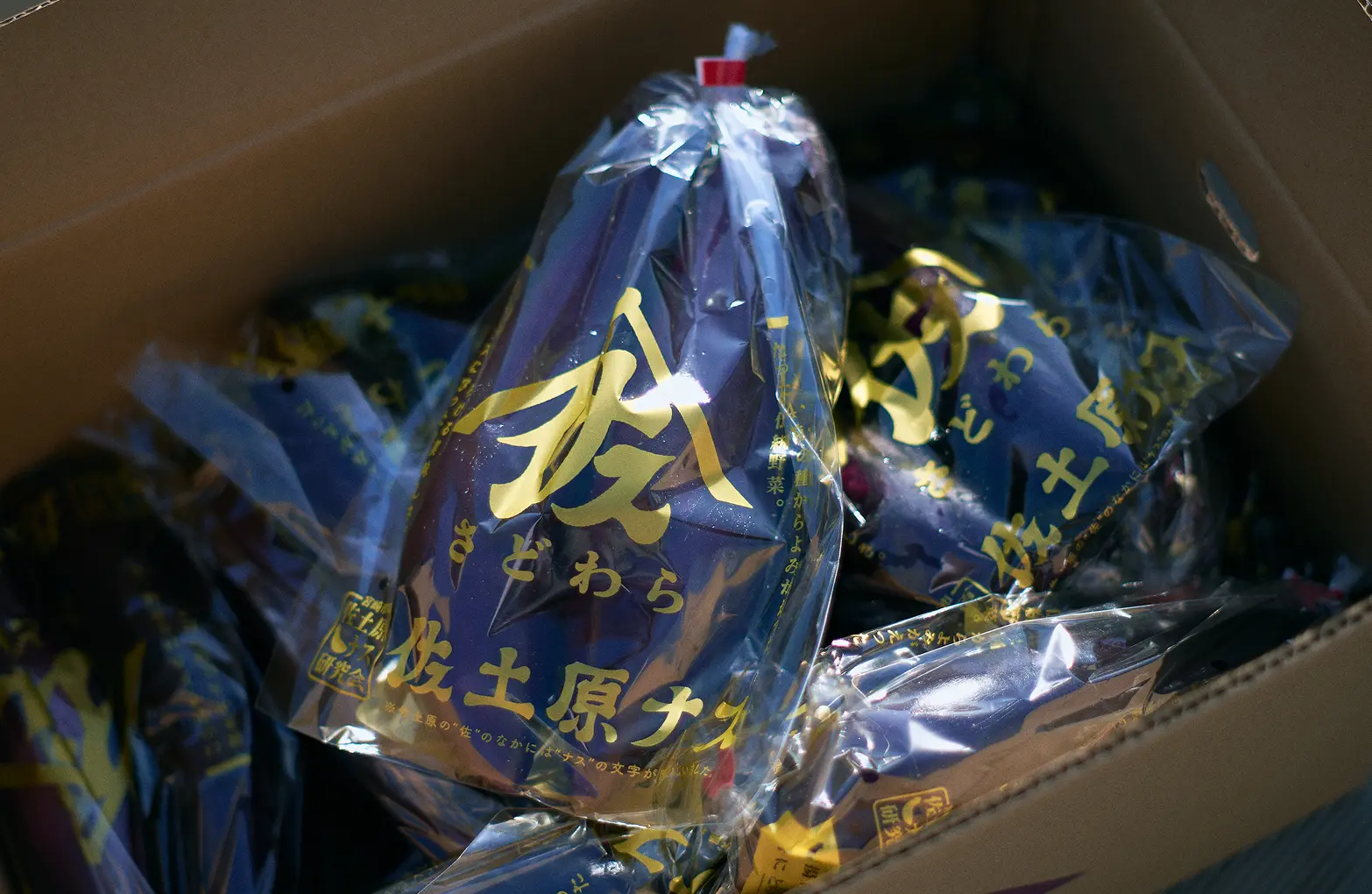
The trademarked logo used by the Grower's Association was created by a designer from Miyazaki City.
Seed Saving at Home to Keep This Local, Traditional Vegetable Alive
Over time, people who remembered its delicious taste and farmers inspired by Toyama, who
continued growing it on his own, began to cultivate Sadowara eggplant. In 2005, their
efforts led to the founding of the Miyazaki City Sadowara Eggplant Grower's Association.
Driven by a commitment to "preserve our local, traditional vegetable," the association not only
grew Sadowara Eggplant but also arranged for logo and packaging designs. Through their efforts,
awareness of the vegetable gradually returned across the region.
Currently, the Grower's Association has 11 members, and the Sadowara Eggplant they now grow
all got their start from those four miraculous seeds. “Everyone grows the eggplants in their
own way, but to prevent them from accidentally crossbreeding with other varieties, we all cultivate
them in greenhouses. Every February, we gather to collect the seeds. I believe that having growers
save and manage their own seeds is essential to protecting this eggplant variety. As long as
the Grower's Association is around, this is one thing we absolutely must keep doing. Also, by
repeatedly taking seeds from the best crops—those exhibiting excellent characteristics in terms
of size, color, luster and the like—we have realized Sadowara Eggplant that are more resistant
to disease than in the old days and have consistent size and shape."
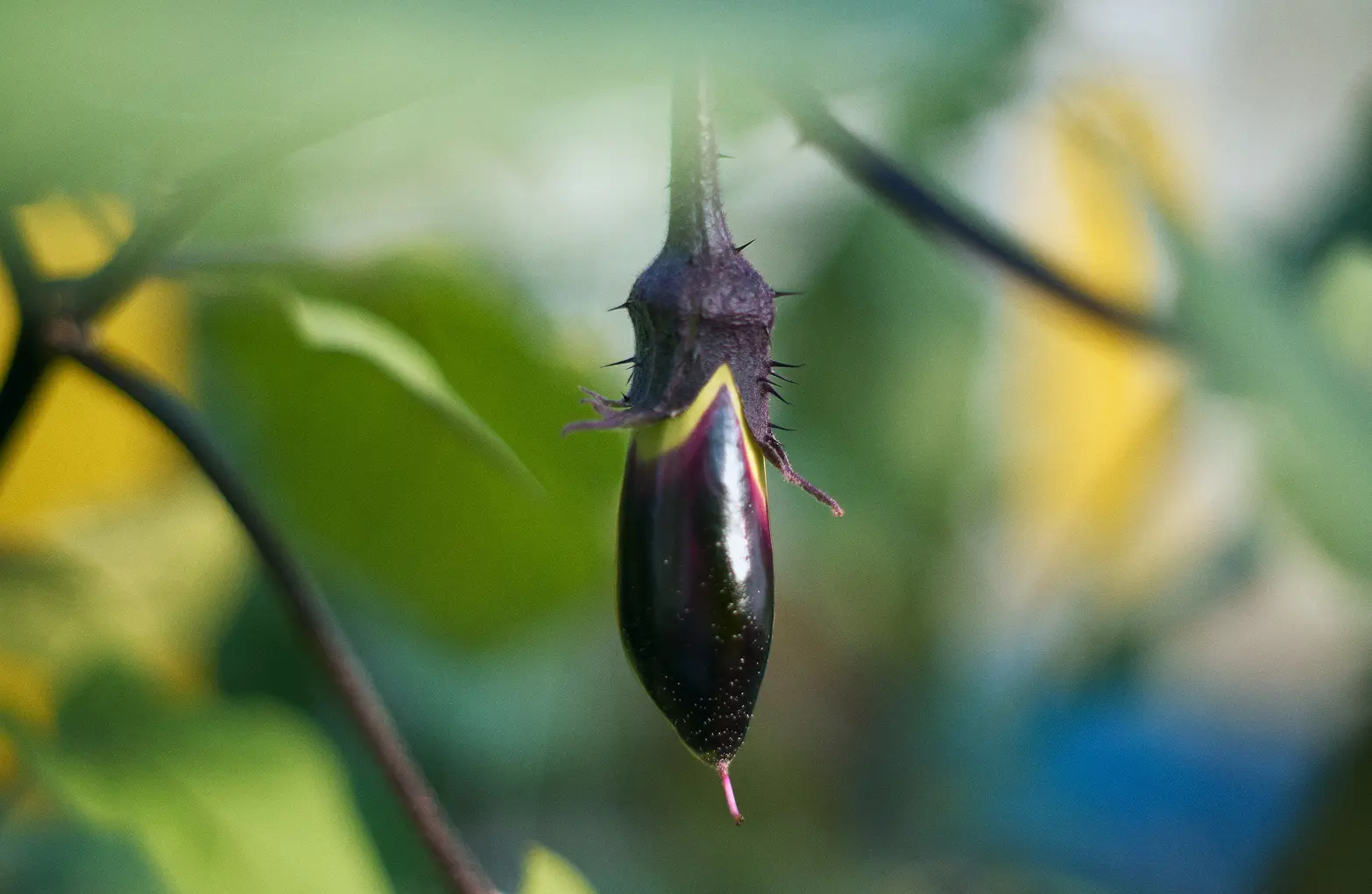
Still, because it remains close to the original wild strain, it has preserved some
distinctive traits—especially the sharp thorns on its calyx and leaves, which have caused
farmers quite a lot of trouble. "Pulling out thorns after getting home has become a daily
routine," comments Saito with a bitter smile.
One particular challenge faced by farmers today is the fierce summer heat, which seems to intensify
further each year. Work in the greenhouse is carried out starting before sunset until the early
morning hours, and then again after sundown. Those are the only practical times.
"This heat isn’t just tough on people—it’s tough on eggplants too," explains Saito. "If it gets
too hot, the plants won't bear fruit. Even if they blossom, the flowers just fall right off
or simply stop at the budding stage and wilt. I've painted my greenhouse walls with heat-blocking
coating and taken other measures, but these haven't fixed the problem completely. I need to
keep searching for new solutions."
Fueled by the Words “That Was Delicious”
It has been four years since Saito joined the Miyazaki City Sadowara Eggplant Grower's
Association and began growing Sadowara Eggplant. Before that, he grew tomatoes in his
greenhouses. He was one of the first in the area to adopt a hydroponic growing approach,
and has steadily expanded his tomato farming operations. Saito became interested in
cultivating Sadowara Eggplant when an old friend, who was a member of the Grower's
Association and already growing the crop, approached him to discuss the topic.
"Truthfully, I hadn't really heard much about the revival of the Sadowara Eggplant," says Saito.
"However, I knew just how delicious that vegetable tasted, so I was interested in growing it
myself. I believed it had potential to become more widespread."
Saito wanted more people to try the vegetable and experience its delicious flavor, and it was
this passion that drove him as he worked in the greenhouse every day.
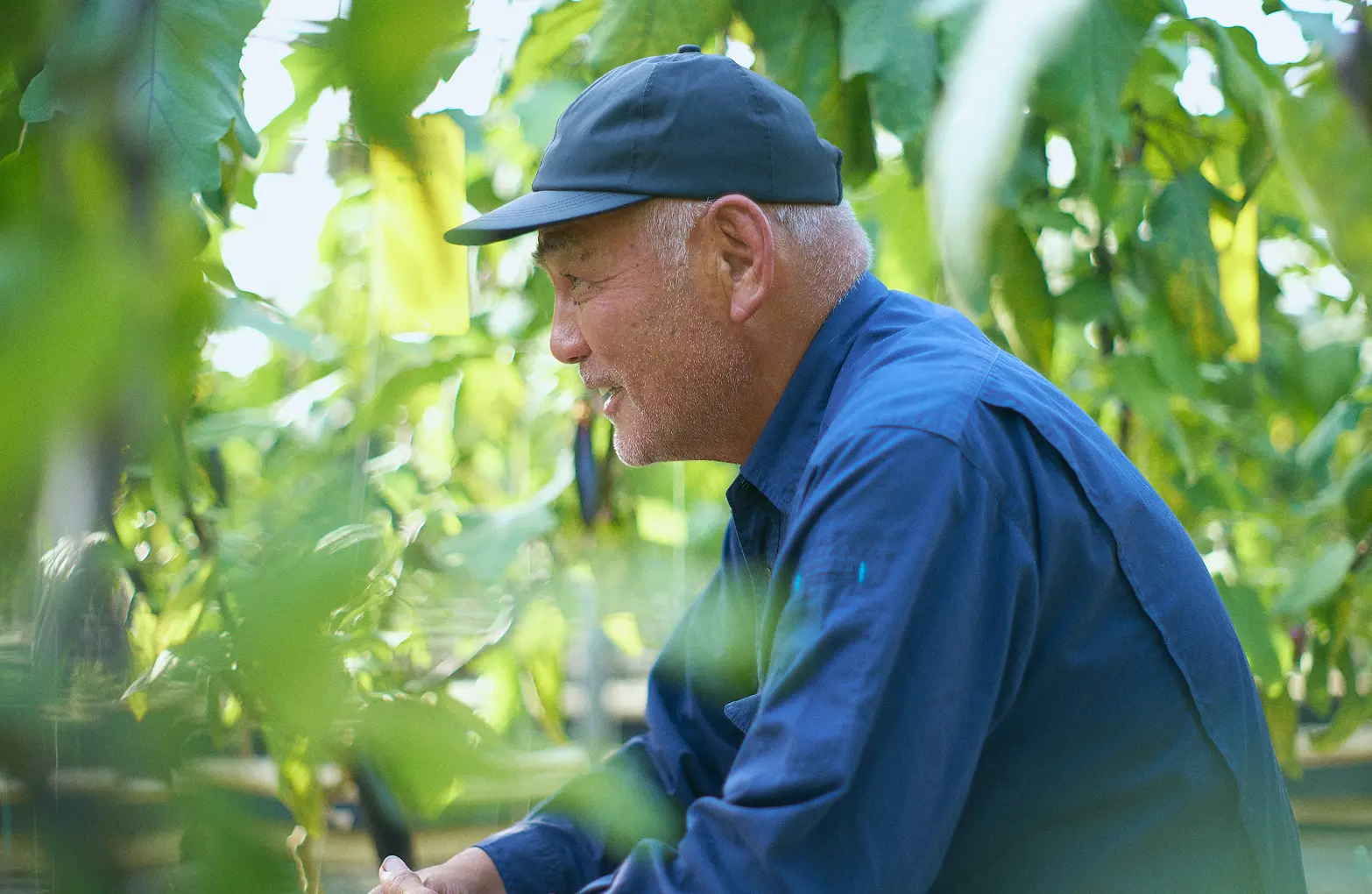
"Every morning when I go into the greenhouse, I see the eggplants glistening there before me.
They are so beautiful. And everyone who eat them said they are so delicious—even little kids,
who normally don't like eggplant, enjoy them. I'm still just as passionate about my tomato growing,
of course, but there is something uniquely rewarding about growing Sadowara Eggplant. In a sense,
agriculture is like child rearing, and this eggplant is one that takes work, but is absolutely
worth growing."
Keeping Alive—and Growing—the Hard-Won Revival of This Traditional Vegetable
The Sadowara Eggplant has been safely brought back from the brink of extinction. However,
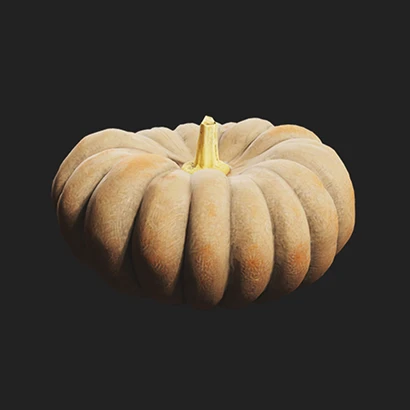
there are other traditional vegetables in the region, such as the Black-skinned Pumpkin,
which are on the verge of disappearing forever. Because these vegetables are often
difficult to cultivate and don't sell for good prices, many growers don't find them to be
worth it, and thus few people grow them anymore. This is actually a nationwide problem,
not just one in Miyazaki.
"Although I'm still new to the cultivation of traditional vegetables, I have a strong will to
find a way to keep them around. Traditional vegetables have been grown by people this long precisely
because they're so delicious. In the case of the Sadowara Eggplant, word has gotten around about
their outstanding flavor. I think we might be able to bring back other traditional vegetables
by making more people aware of their delicious taste, just as we did for this eggplant." So
says Saito, whose dream is to make the Sadowara Eggplant known by people throughout Japan. "Much
like we've seen with the Senshu Mizunasu eggplant from Osaka Prefecture, we hope that people
will someday associate the Sadowara Eggplant with delicious eggplant in general. The Sadowara
Eggplant has that potential, so we want to make it more widely known outside of Miyazaki Prefecture.
We managed to somehow save it from the verge of extinction; now we want to grow its market even
further."
Interview&Text / Sachiko Kawase
Photo / Yuta Nishida

Farmer
Koichi Saito
Born in Miyazaki City, Miyazaki Prefecture in 1955, Saito joined the Japan Self-Defense Forces after graduating from high school, and later went on to start his family farming business. He was a regional pioneer in hydroponics through his cucumber and tomato farming. In 2021, Saito joined the Miyazaki City Sadowara Eggplant Research Association and began growing Sadowara Eggplant. In 2024, he became the organization chair, and has since dedicated himself to further popularizing the vegetable and its cultivation. Last year, he visited growers of Kizaki Yakinasu eggplant (which traces its roots back to Sadowara Eggplant) in Niigata Prefecture for purposes of deepening their mutual ties.
References
warmerwarmer, Beautiful Vegetables of Japan (Orange Page); Takashi Aoba, Lineages of Native Vegetables (Hosei University Press); “This Month’s Producer, Vol. 11,” in SEASON: A Culinary Travel Media for Miyazaki’s Seasonal Foods; “Sadowara Eggplant: Revival of a Legendary Traditional Vegetable,” Minna no Nogyo Hiroba; “Sadowara Eggplant,” Noguchi Seeds; “The Miraculous Eggplant: Sadowara Eggplant,” Gritz Design.
Share this page


