Voice of Farmers
Charmed by Shinshu Turnips
Reflecting the Terroir
of Higashiomi
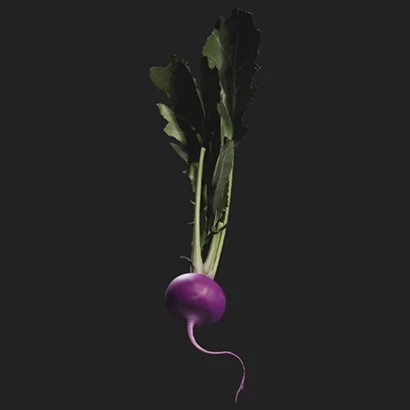
Shinshu Turnip
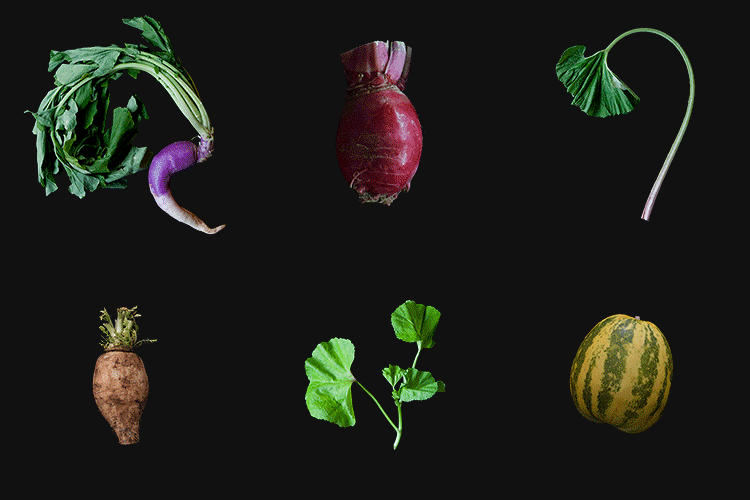
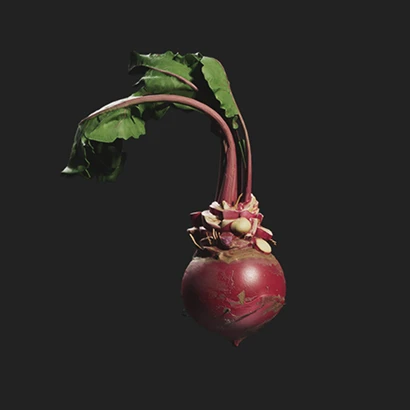
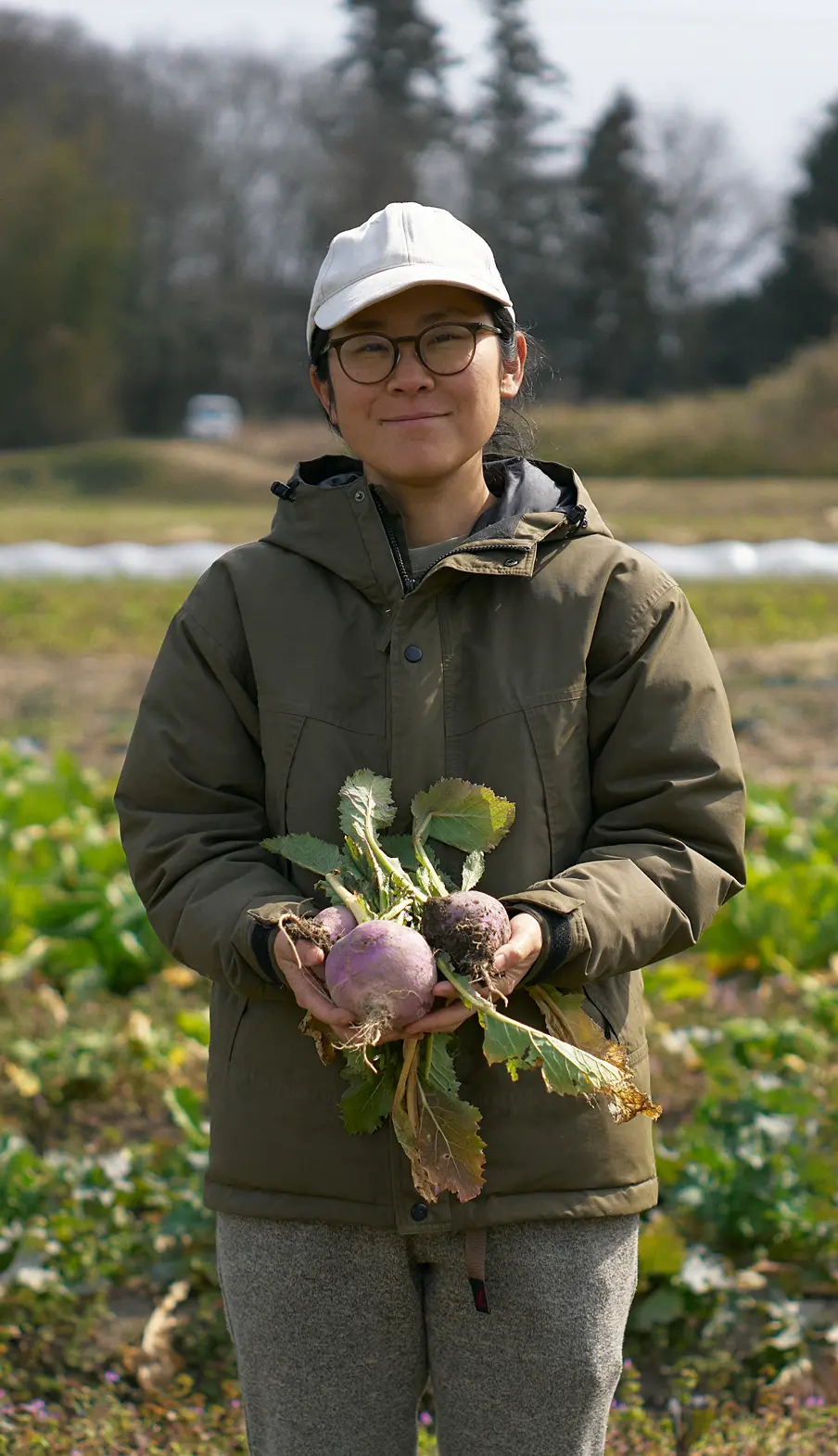
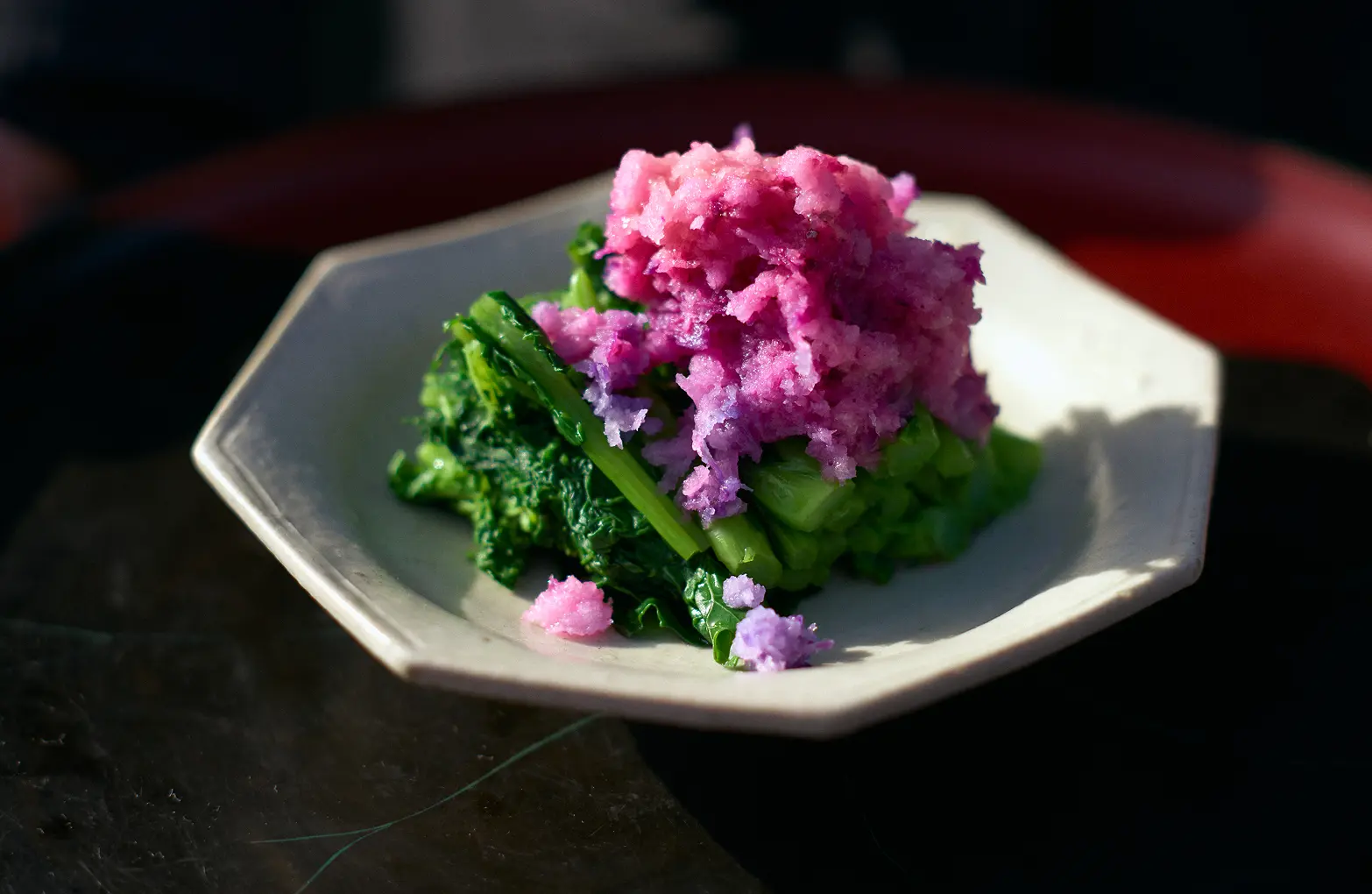
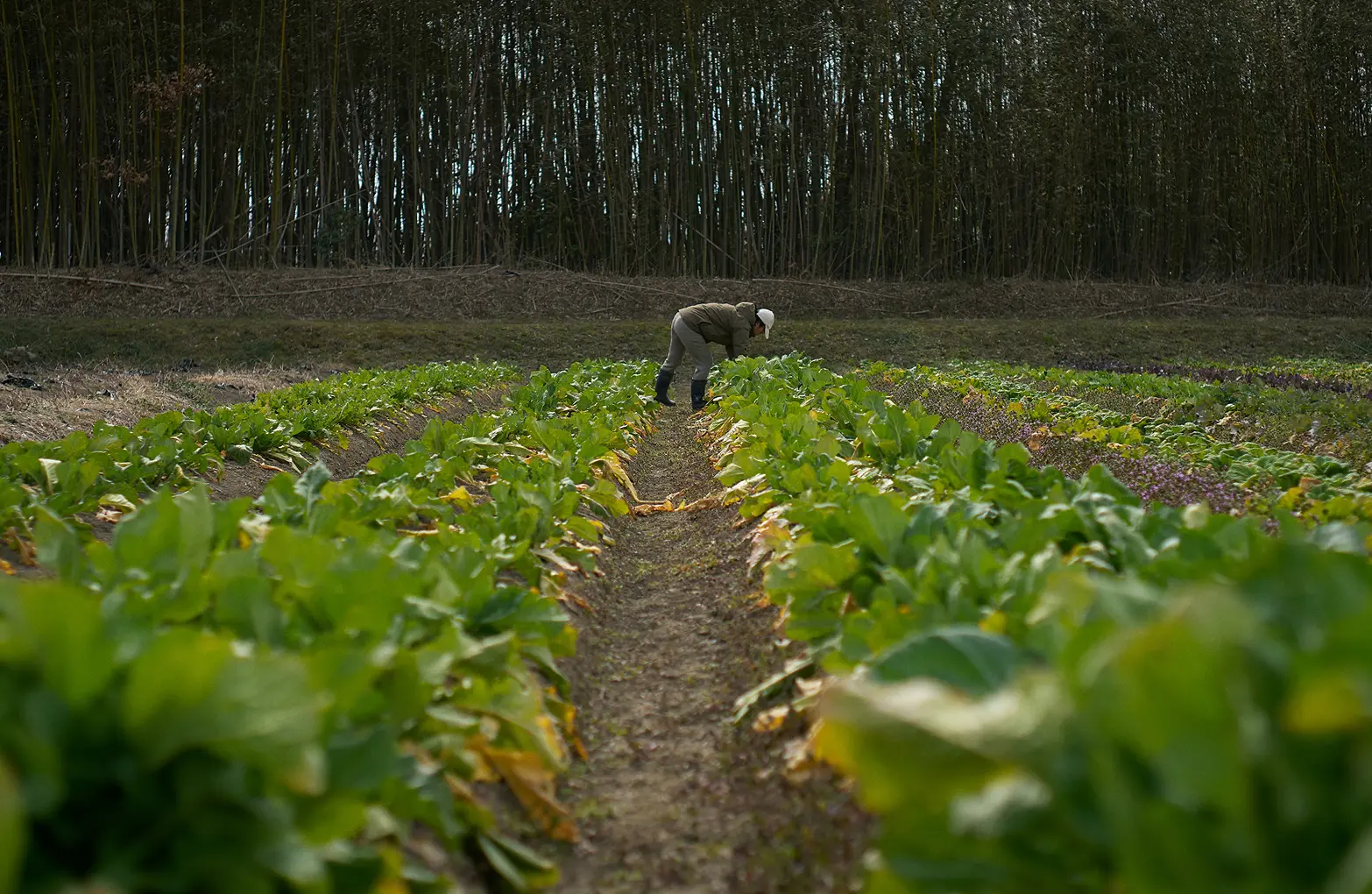
This red turnip is grown in the Echigawa River basin in eastern Shiga Prefecture, on the east side of Lake Biwa. The name "Shinshu," which is the area now defined as Nagano Prefecture, is appended to the turnip's name because the vegetable was originally brought by military commander Kiso Yoshinaka (Minamoto no Yoshinaka) from Shinshu in the 12th century when he camped his army at Hyakusai-ji Temple in Omi Province—located in modern-day Higashiomi City, Shiga. Since then, it has been cultivated as a turnip of the Omi (Shiga) region. It is believed that almost all turnips grown in Omi, including the Hinona Turnip, share some genes with the Shinshu Turnip. Having long lost its growers and become almost legendary, the Shinshu turnip was revived in 2019. It is now cultivated solely by Mami Matsumoto (pictured), a producer of heirloom vegetables in Higashiomi.
Turnips have been grown in Japan since ancient times, with records of their cultivation
found in documents dating back to the Nara Period (710–94). They have spread throughout
Japan and taken root locally, resulting in many indigenous varieties that differ in color
and size. The Shinshu Turnip has its roots in Higashiomi City, Shiga Prefecture.
"Because this turnip uses 'Shinshu' [meaning Nagano] in its name, but its history is based on
Omi [Shiga], people get confused and often ask me where the vegetable is actually from." So
says Mami Matsumoto, who grows Shinshu Turnips.
Only One Farmer Preserves the Shinshu Turnip, Whose Roots Date Back to the Late Heian Period
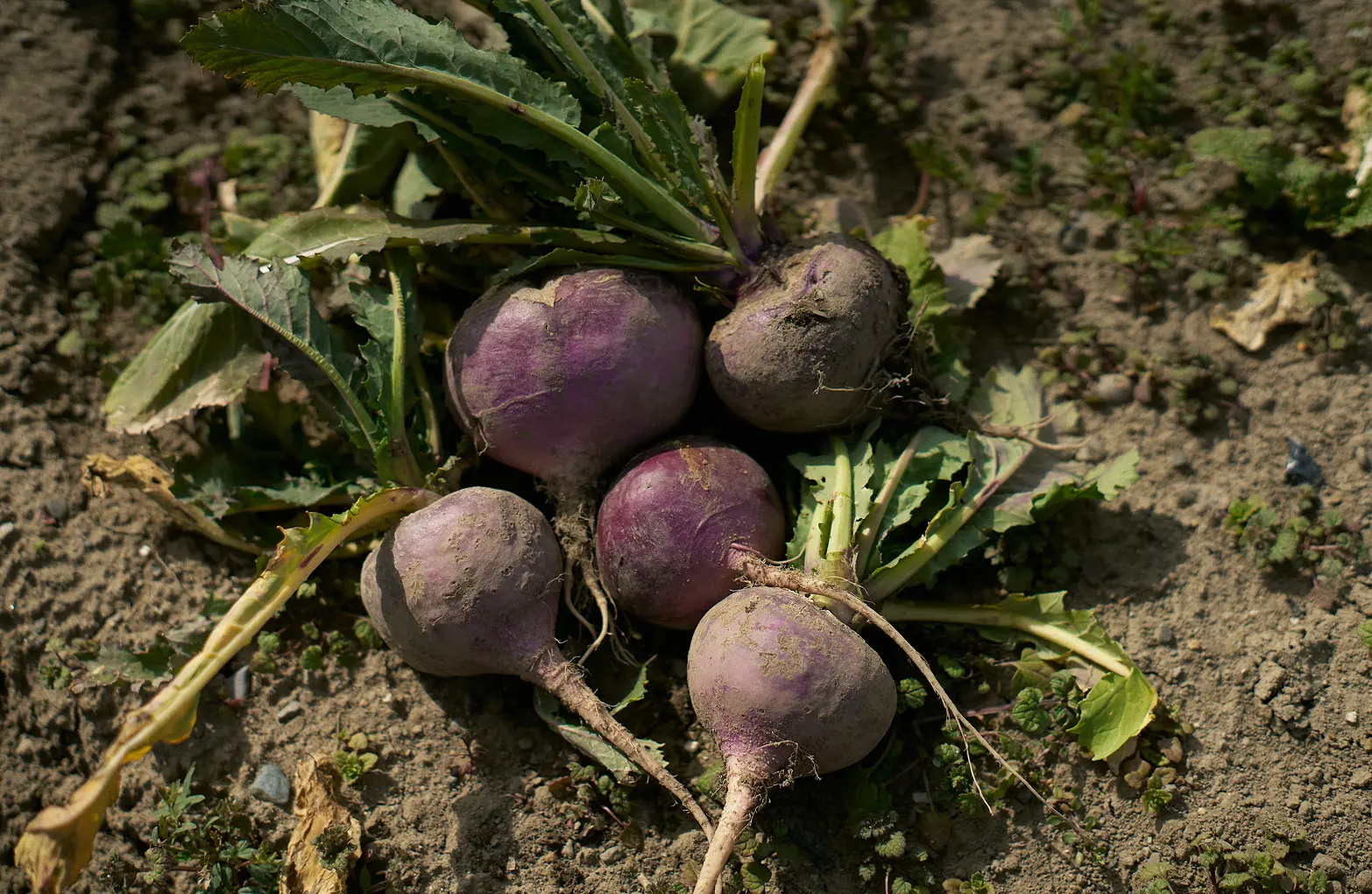
In all of Japan, the Matsumoto household is the only one still cultivating this red
turnip. Records show that the Shinshu Turnip dates back to the late Heian Period, circa
1180. Its origins are said to be around the Echigawa River in modern-day Higashiomi City.
Explains Matsumoto, "In my research, I found records showing that Kiso Yoshinaka encamped in
this area on his way to Kyoto. I believe that's when the turnip came here from Shinshu. It's
interesting that the place where the turnip comes from, and not where it's now grown, is used
in the name."
Sadly, growers of the vegetable dwindled in numbers over the years, and after a time, there
was almost nobody who knew of the Shinshu Turnip any longer. Its name was preserved in historical
records alone—until 2019, when it sprouted anew. Matsumoto received seeds that had been preserved
in a laboratory at Ryukoku University and successfully revived the plant.
Generally speaking, red turnips are very bitter and have a pronounced and unique flavor, making
them mainly suitable for pickling. The Shinshu Turnip, however, is soft and quite sweet, enabling
its use in other culinary applications such as sautéing. When grated with the peel on, the turnip's
natural red skin gives it a bright, vibrant appearance.
Encountering Various Heirloom Vegetables of Japan and Their Growers
Matsumoto recalls a specific moment in her life that piqued her interest in heirloom
vegetables, including the Shinshu Turnip.
"I have always liked vegetables. However, I used to think that the vegetables you find in a
typical supermarket are the only ones out there. That was back when I was a white-collar worker.
Around the time that I began to take interest in growing vegetables for myself, I read an essay
on the northern Shiga region concept of yome-iri nasu [referring to eggplant, or nasu, used
when someone's daughter goes off to marry into another household, expressed as yome-iri in Japanese].
When a woman decided to marry into a man's family, they would bring heirloom eggplant seeds
from their birth household. Those seeds would be used to create a new strain of eggplant suited
to the climate and land of her new husband's household, and the tradition would carry on as
such. When I read that, I was surprised and pretty impressed to find out that vegetables were
propagated in such a way. Later on, I visited various rural mountain villages and encountered
vegetables I had never seen before along with the people who cultivated them. After learning
of that tradition, vegetable growing became more and more enjoyable for me."
Matsumoto had discovered a new side to the wide-reaching and surprisingly deep world of vegetables.
Recalling her initial discovery of native-species vegetables, she says, "There is no place where
such vegetables do not exist. Relatively speaking, there are actually very few heirloom species
here in Higashiomi. But when I began to search for them myself, I came across the Shinshu Turnip.
More recently, someone approached me and said they had found some seeds from sesame raised long
ago in the area by their grandmother. I don't know the name of that sesame variety, nor do I
know its history. But, I do know that it had been passed down and raised in that family, and
the seeds produce sesame entirely different from that grown around here—a really unique kind
of sesame, in fact."
Heirloom Vegetables Help Us Fall in Love With a Place
It's not uncommon for many people to think, like Matsumoto once did, that vegetables
stocked by supermarkets are the only ones available. Not many people know that each region
of Japan has its own unique vegetables, passed down from one generation to the next. When
asked why she is so passionate about heirloom vegetables, Matsumoto answers thoughtfully,
choosing her words with deliberation, "There's only one reason that I find myself coming
to like a certain place: because of its unique native vegetable species. My family
constantly moved around due to my parents' work, so I lived in all sorts of places
throughout my childhood. As a result, there was no single place that I felt strongly
attached to—no place I would call my true hometown. Later in life, when encountering all
of these heirloom vegetables, I learned the history of how they had traveled all over the
place and taken root in their growing region. As a result, I became more attached to those
places myself through their vegetables.
"These days, a lot of people move away from their places of birth to live in big cities, so
there aren't many people with a strong love for their hometown or its general culture and scenery.
In that regard, I think that an area's heirloom vegetables play an important role as part of
food culture. There was a researcher at Yamagata University named Takashi Aoba who said that
'vegetables are living cultural heritages,' and I agree completely."
Describing her current place of residence, Matsumoto adds, "It feels as if my field is a 'resting
place' on the journey that connects the vegetable's past with its future.
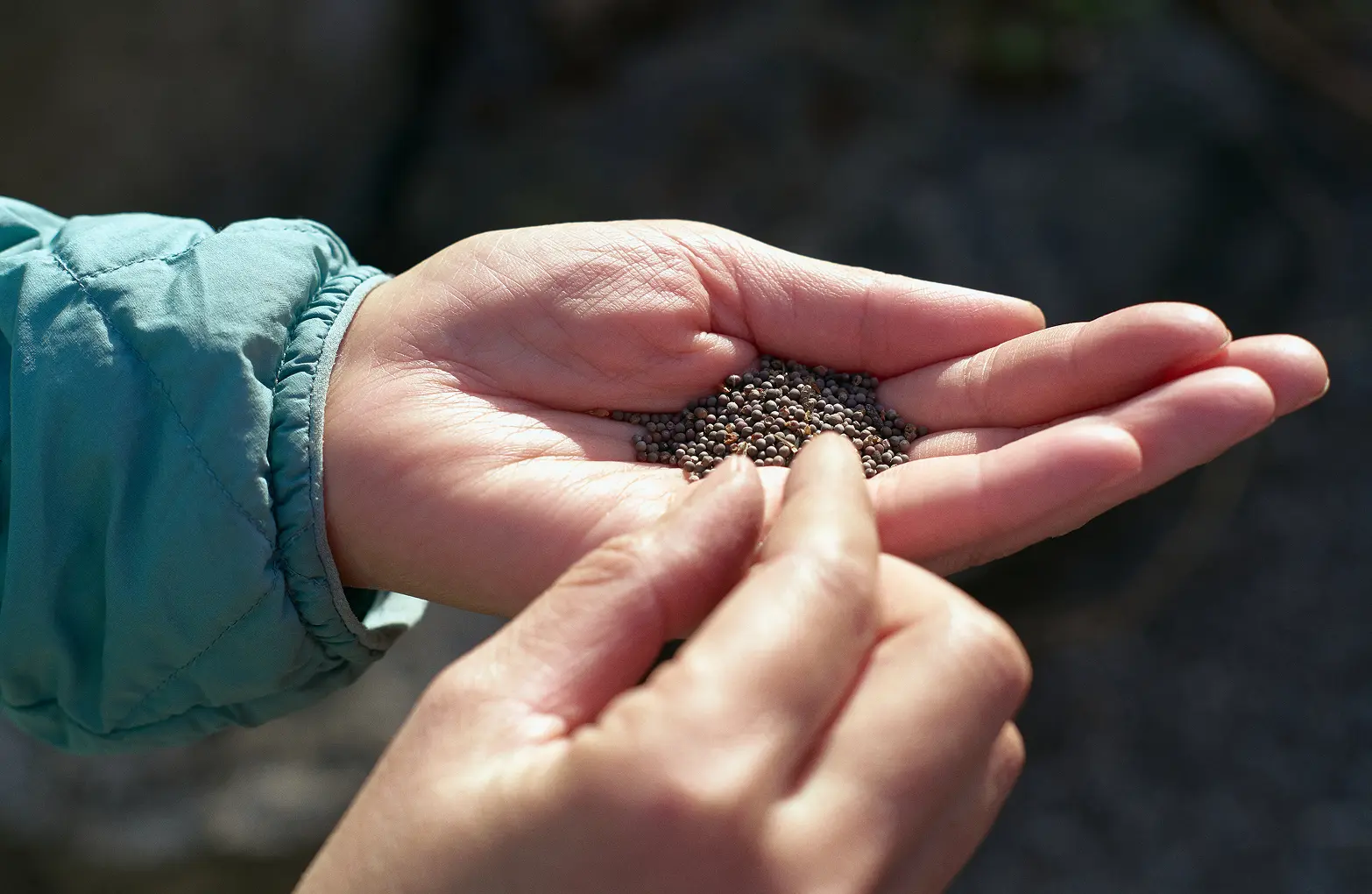
Therefore, I need to collect seeds from my produce. It's not so much an obligation as it is
a desire to ensure that the lives of these living cultural heritages do not end here."
Driven by the Life Force of Heirloom Vegetables
Heirloom vegetables with ties to a certain region have a life force suited to survival in
that area. Unfortunately, severe changes in climate-condition in recent years have,
according to Matsumoto, "Made us unsure of what will happen in the coming years. One thing
I'm sure of is that we've reached an important turning point for farmers, who must take
various measures to continue producing successfully."
She has, however, discovered a new material designed with agricultural technology that may help
her through this challenging period. "I've been farming for 10 years now, and I've experimented
with a lot of different techniques and approaches. Agriculture means going head-to-head with
Mother Nature, and although we try a lot of different things to survive and thrive, it's hard
to know if we've made the right choices until some time has passed. Despite having done this
for 10 years now, I don't feel like I've accumulated all that much know-how yet. That's been
my impression of things so far. Recently, I've decided to try out netting material made with
SOLAMENT™, which can absorb near-infrared light and also generate its own heat. I'm hoping this
will help provide the warmth needed to grow seedlings in my greenhouse during the winter. I'm
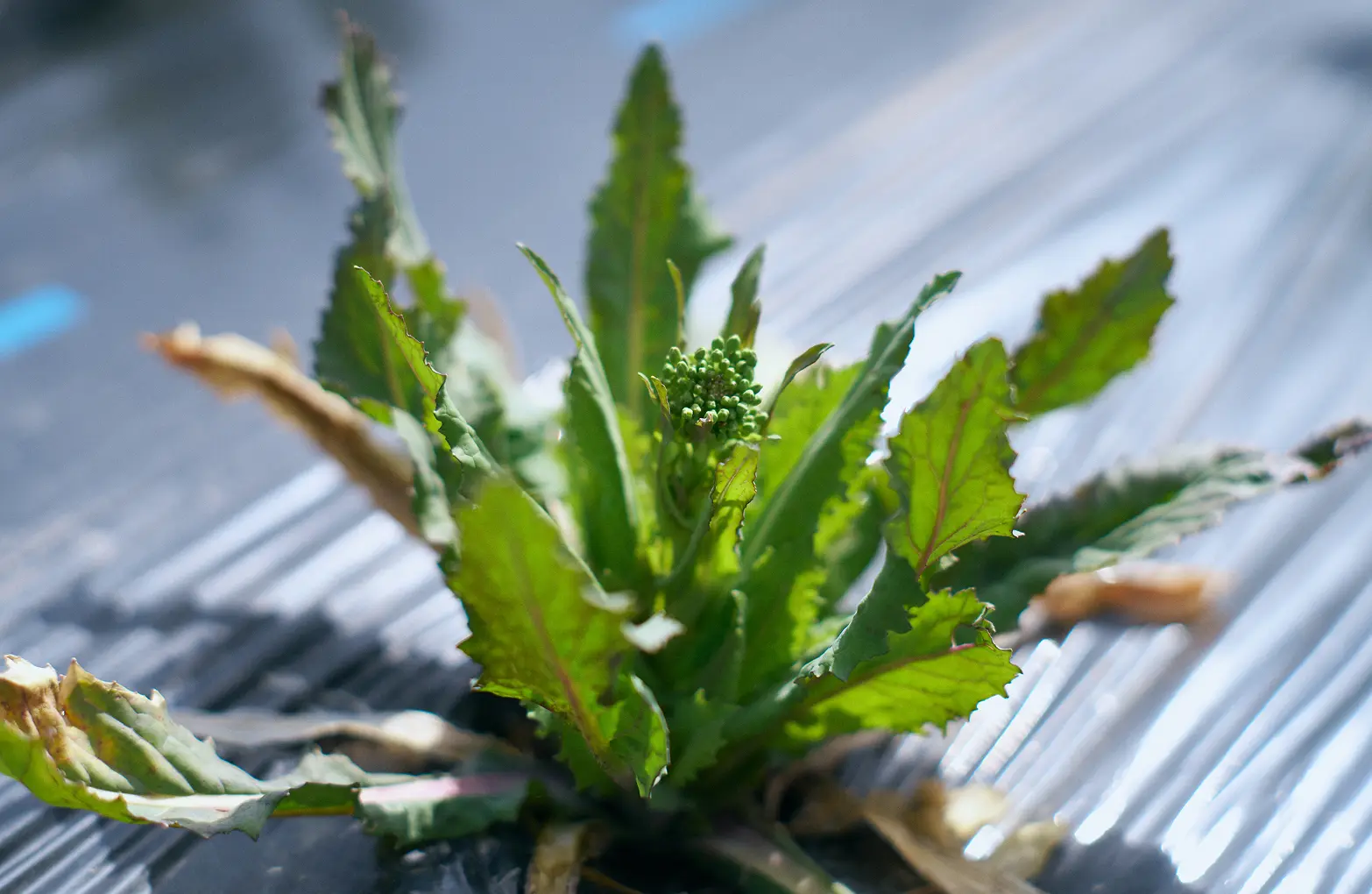
also thinking of using this advanced shade net for the Shinshu Turnips sown in the fall. When
rainfall is insufficient, the heat from the sun steals away water content from the soil. Using
SOLAMENT™ shade net will probably provide enough heat-blocking effect to mitigate that problem."
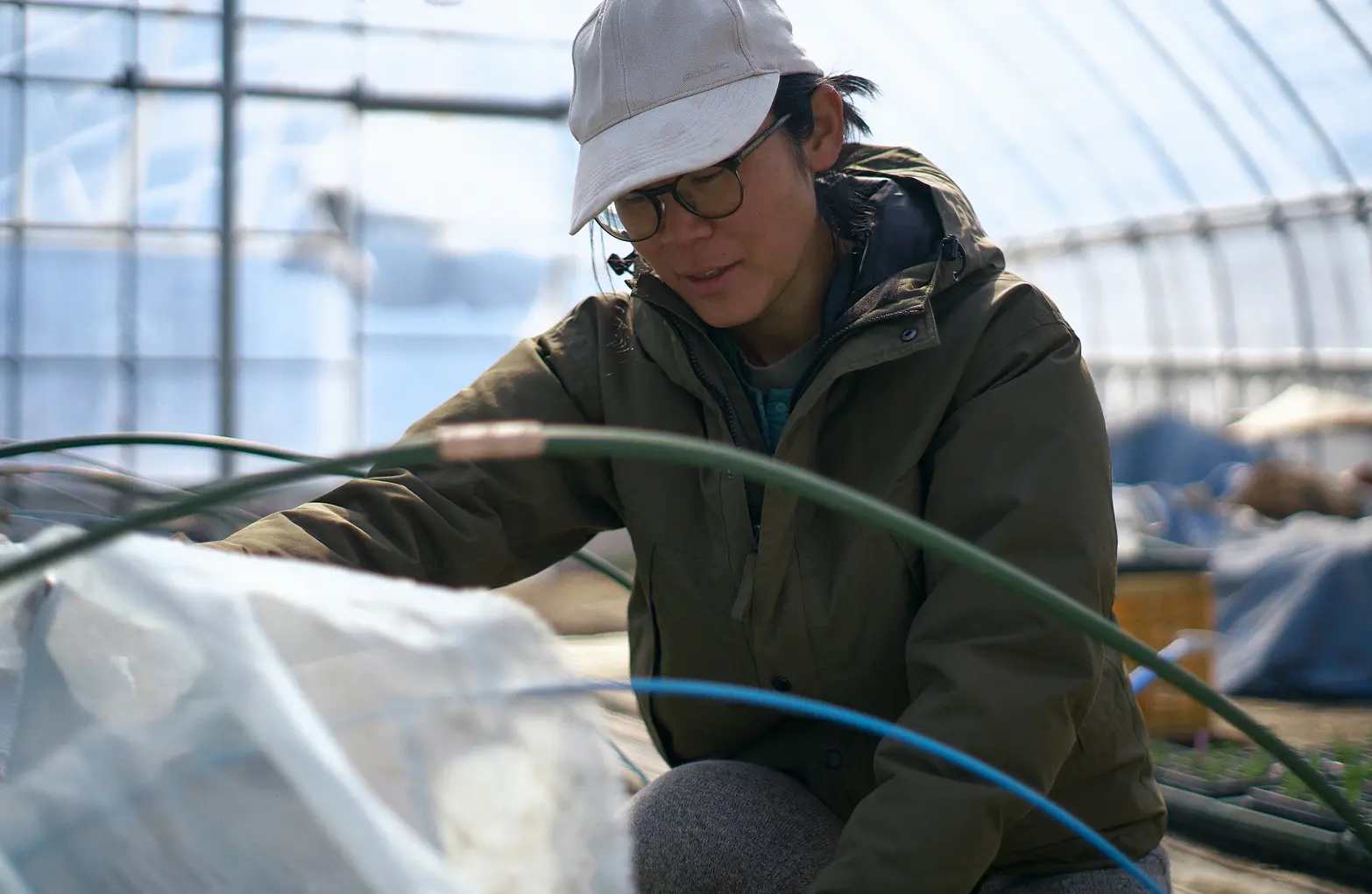
It is estimated that humankind began farming more than 10,000 years ago. They collect the
seeds from vegetables they raise, plant those seeds, then harvest the resulting crops. By
selecting only the best-quality plants for seed collection, they foster vegetables with
characteristics suited to their growing regions, and then harvest their seeds to continue
the cycle—a tradition continued from the past until present.
"Vegetables get help from humans to evolve so that they can survive and prosper," says Matsumoto.
"Through my work, I do what I can to give the vegetables the things they need to survive more
effectively. Sometimes, I think those vegetables are just using me [laughs]. But I'm not doing
it because it would make me sad to see them go extinct; rather, I'm doing it because I want
to. It just seems like the right thing to do for these vegetables I discovered and have come
to love over the years."
Interview&Text / Sachiko Kawase
Photo / Yuta Nishida

Farmer
Mami Matsumoto
Born in 1981, alongside her work in R&D at a chemical manufacturer, Matsumoto traveled to rural villages throughout Japan in search of the vegetables she loved, eventually becoming fascinated by heirloom vegetables. She ultimately made the decision to become a full-time farmer. Following a period of training and education, she started her farm in the Aito district of Higashiomi City, Shiga Prefecture to embark on her "Yasai to Tabisuru" (a journey with the vegetables). Working with her husband, she cultivates approximately 15,000 square meters (3.7 acres) of land, growing about 15 different heirloom vegetable types throughout the year. Her goal is to create a cultural cycle in the region revolving around eating through Shinshu Turnip and other vegetables that have been passed down over the years.
References
warmerwarmer, Beautiful Vegetables of Japan (Orange Page); Takashi Aoba, Lineages of Native Vegetables (Hosei University Press); Mainichi Guriru Bu, 27 Jan. 2020; "Travels With Vegetables," Pocket Marché; "Travels with Vegetables" Facebook page; "Agriculture and Evolution (Part One)," Web Misuzu, 1 Dec. 2025
Share this page


