Voice of Farmers
Preserving the Sugihashi Red Turnip, Passed Down for Over 150 Years with Deep Hometown Pride
Sugihashi Red Turnip (Akakanba)
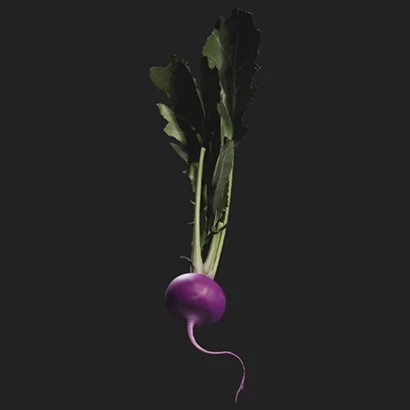
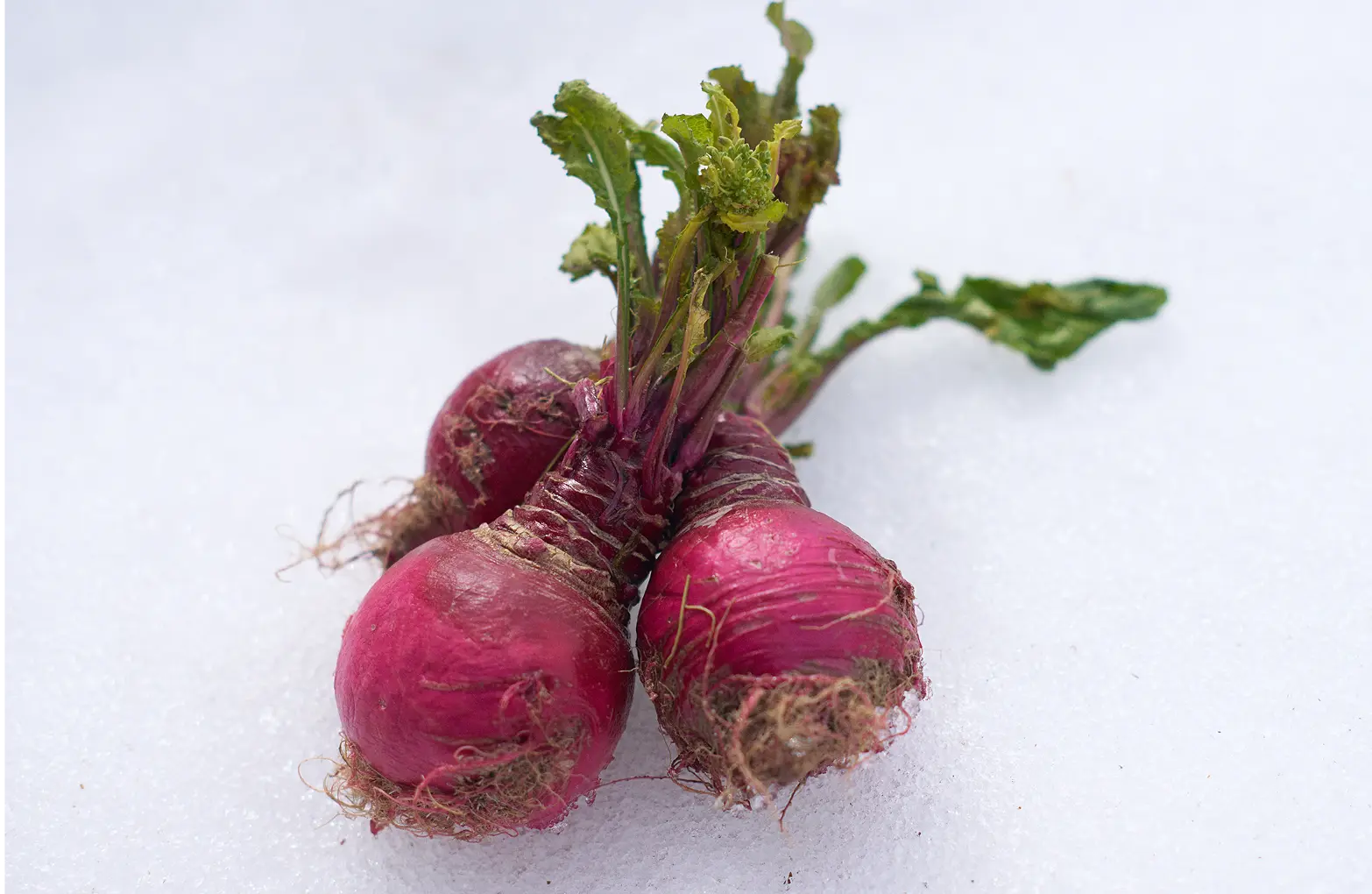
The Sugihashi Red Turnip (Sugihashi Akakanba) is a red turnip that has been passed down
and grown for more than 150 years in Sugihashi, a settlement within the limits of Tsuruga
City, Fukui Prefecture, and located right on the border with Shiga Prefecture. Its
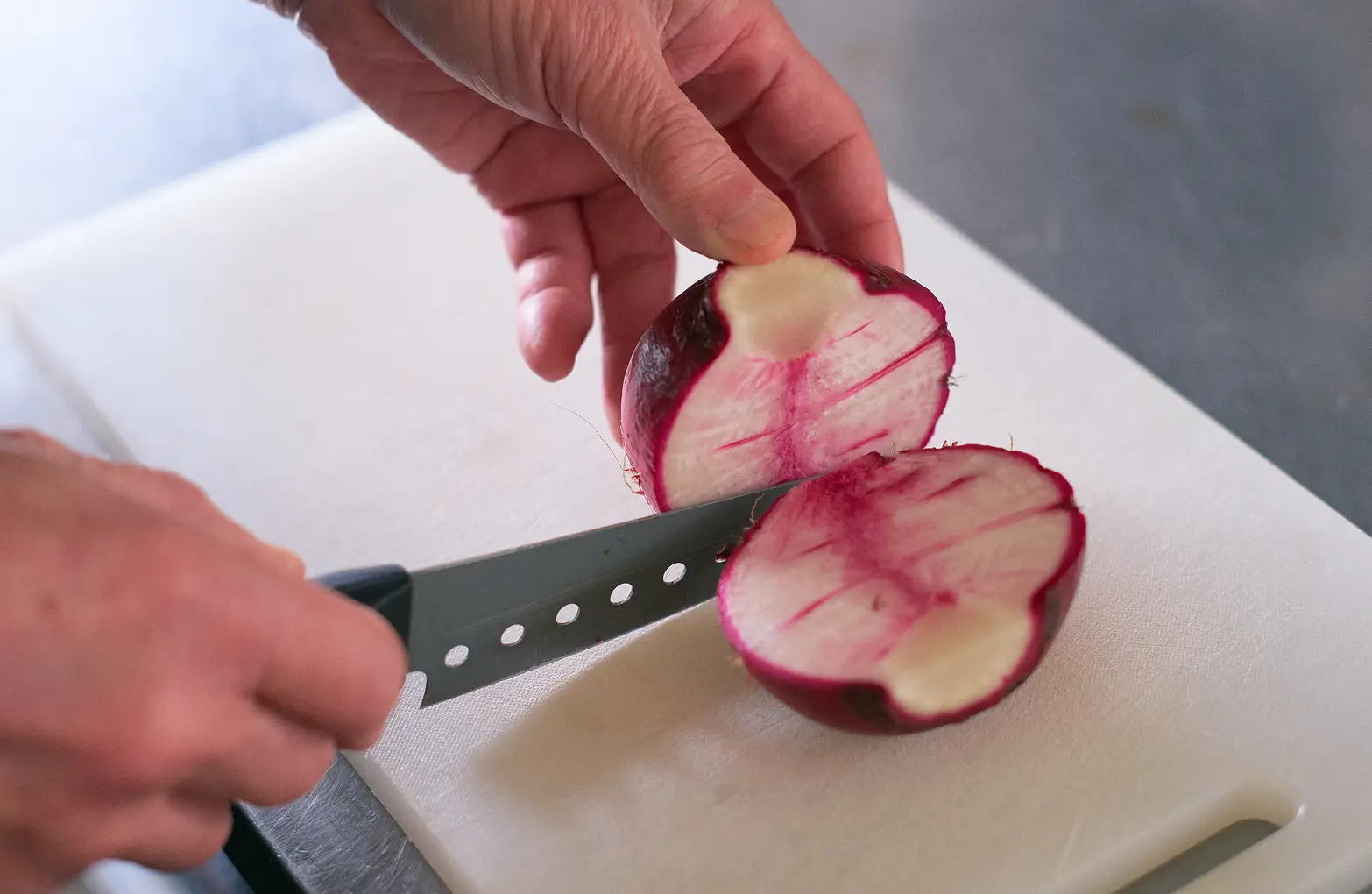
appearance is unique with a deep-red coloring and numerous fibrous roots. When cut open, a
bright-red band of color cuts through the pure-white flesh inside. As for taste, it has a
unique pungency and mild bitterness. This turnip is sown in late August and harvested from
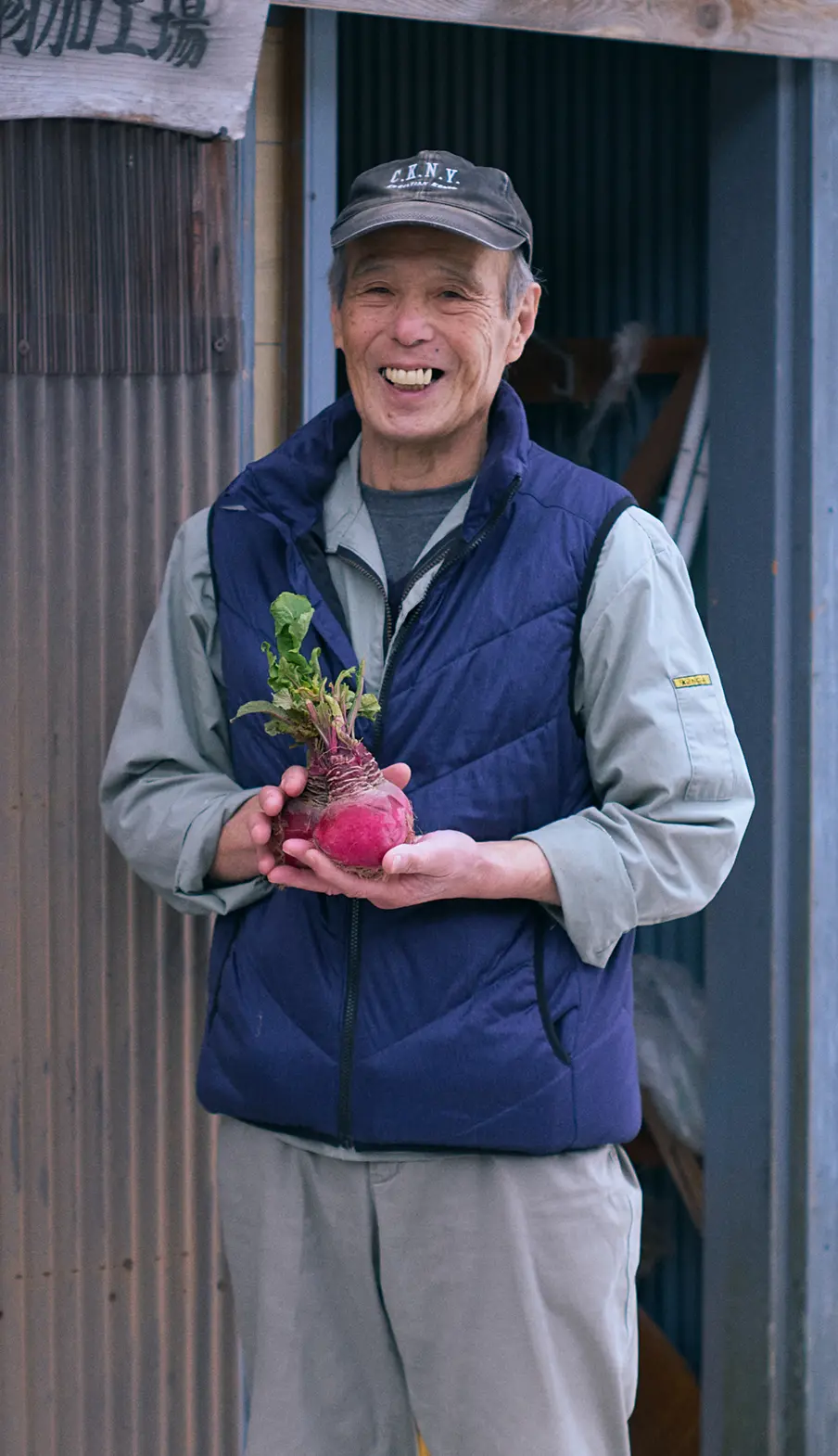
late October onward. Kazuo Yamaguchi (pictured) founded the Sugihashi Akakanba Growers
Association to ensure that this turnip continues to be cultivated and does not disappear
from our world.
This red turnip is officially certified as a Fukui Hundred-Year-Old Vegetable based on fulfillment
of three conditions: (1) Growers personally collect their own seeds for cultivation, (2) The
vegetable has been cultivated for at least 100 years, and (3) The vegetable has cultural roots
in the local area.
Tsuruga City, situated in southwest Fukui Prefecture, faces Wakasa Bay and is occupied in
large part by mountains and forests. Sugihashi is a small settlement nestled between the
mountains, and it is the location where the Sugihashi Akakanba has been continually grown
for more than 150 uninterrupted years.
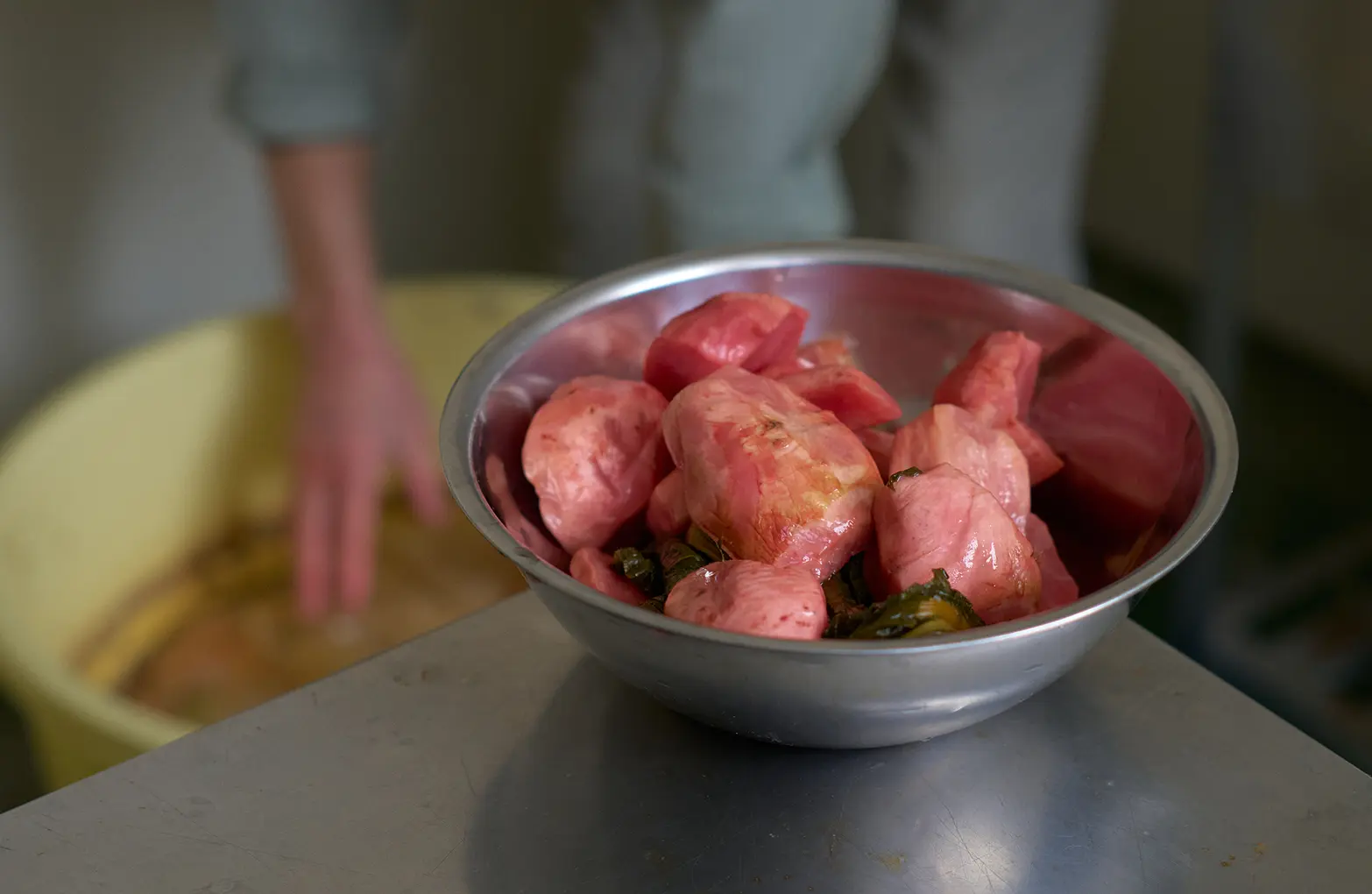
"The word kanba originally referred to a variety of pickles. This area is covered under heavy
snows during the winter, so people would pickle their red turnips at the start of winter and
eat these pickles with meals throughout the season. The vegetable is an integral part of culinary
culture around here. Long ago, these mountain slopes were used for growing Sugihashi Akakanba
using the slash-and-burn method." So explains Kazuo Yamaguchi, a farmer who was born and raised
in Sugihashi and serves as head of the Sugihashi Akakanba Growers Association. In the latter
capacity, he organizes grower activities and is involved in processing and sales for pickled
turnips and other products.
A One-of-a-Kind Flavor and Form, a Source of Local Pride
"Sugihashi was once a center of limestone quarrying. Shortly after World War II, however,
the quarries disappeared, and it became the quiet village you see today," says Yamaguchi.
"However, we've managed to continue growing the Sugihashi Akakanba, which is a vegetable
species native to the area." The Sugihashi Akakanba is a large, red turnip. As one unique
physical characteristic, it extends fibrous roots on both its east- and west-facing sides
while in the ground. When cut open, the turnip is white inside with a red band through the
middle.
Adds Yamaguchi, "When you eat the Sugihashi Akakanba, it has a mildly bitter flavor typical
of this turnip type. But if you leave it in the ground without harvesting in the fall, letting
it remain buried beneath the winter snow, that bitterness turns into a sweet flavor. It's quite
a task to dig through the deep snow and pull them out of the ground in winter, but it always
makes me happy in a way few other things can to see that red turnip emerge. There's no other
turnip with the same look or flavor; The Sugihashi Akakanba is a source of pride for our community."
A Vegetable That Reflects the Soil and Climate of Sugihashi in Tsuruga, Fukui
Currently, this turnip is grown only in Sugihashi. According to Yamaguchi, however, it was
once cultivated throughout the entire Arachi region. But improved turnip varieties were
developed, offering a more uniform appearance, increased resistance to disease, and
greater ease of cultivation. As a result, many people turned away from the Sugihashi
Akakanba, leaving only eight households still growing it today.
"Some have tried taking it to Tokyo and growing it there, but it didn't go too well," says Yamaguchi.
"The clayish soil here, along with the alkaline soft water filtered through local limestone,
bring out the defining characteristics of the Sugihashi Akakanba. The elevation here, which
is 150 meters above sea level, is also perfect for this turnip. Finally, the snowfall is a must
for bringing out its sweet flavor. Ultimately, native-species vegetables are truly suited to
the places where they originally come from."
Continually Developing New Approaches to Preserve the Sugihashi Akakanba for Future Generations
The members of the Sugihashi Akakanba Growers Association produce about 5,000 turnips
annually. However, they only reached half of this number in 2025, topping out around 2,500
turnips. The reason was damage caused by wild animals as a result of global warming.
Yamaguchi elaborates: "The snow normally starts to fall around mid-December every year,
and snow cover reaches three to four meters at its peak. From that point onward, you don't
see the ground until spring. However, in December of '25 and January of '26, there was
very little snowfall, and the snow that did fall melted away quickly. As a result, the
deer, monkeys, and other wildlife came by and ate our turnips, which had always been
protected by snow cover in the past."
Moreover, the previous year saw no rain whatsoever following seed sowing, causing much of the
crop to wilt and die. That year, Yamaguchi says he decided to use the turnips he grew primarily
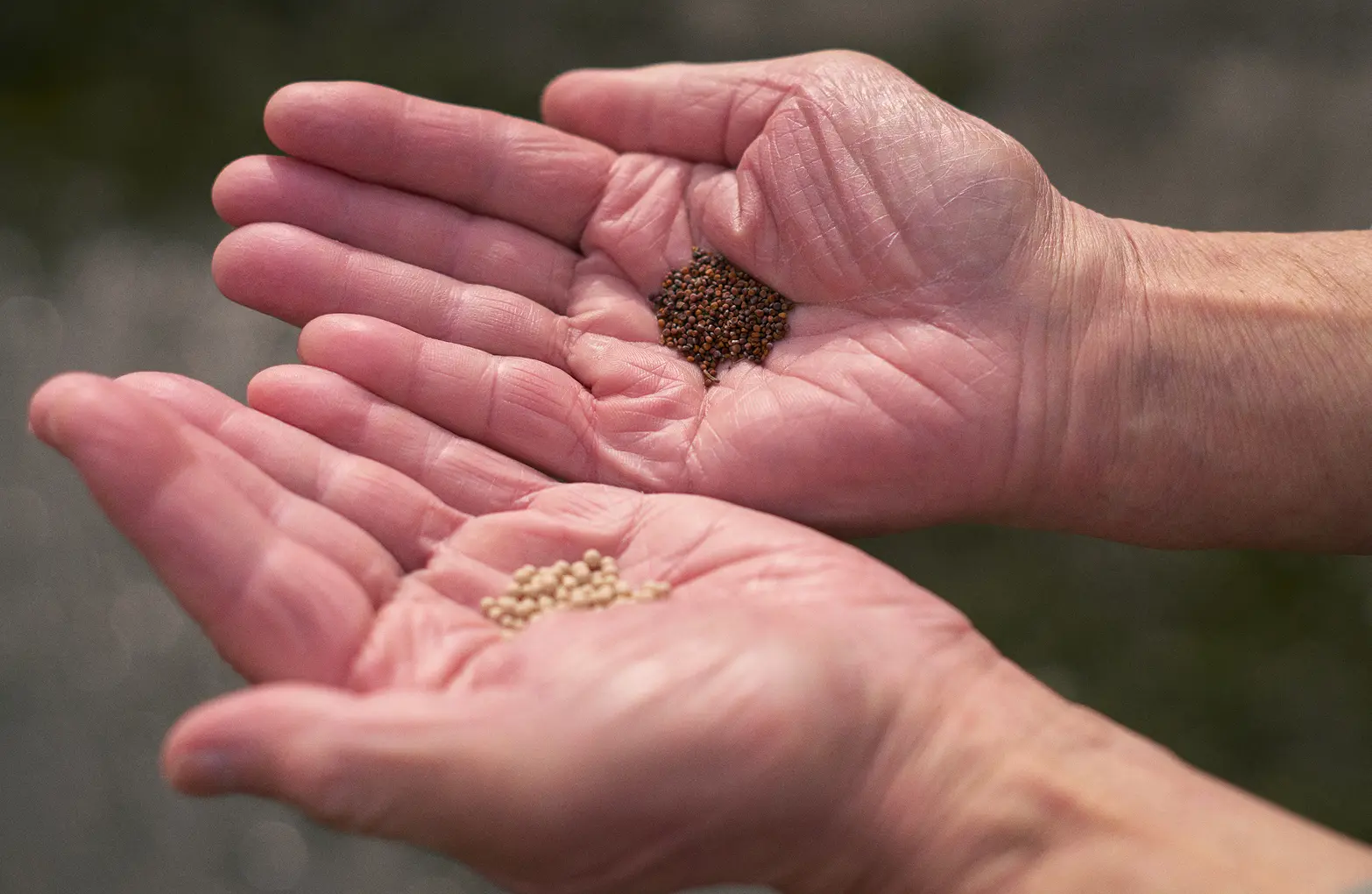
for seed collection. "Plants used for seed collection are moved to a distant growing plot so
they won't crossbreed with other brassica crops. Crops for consumption are harvested in the
winter, but those used for seed gathering are cultivated until May. I had a tough year in '24,
but I managed to collect a good amount of seeds, while also harvesting a meager 300 turnips.
But I counted that as a win, given the circumstances."
Farmers no longer know how climate conditions will change from year to year, nor do they know
what challenges will face them next as a result. "That's why I keep trying out new approaches
every year—to make for a stronger Sugihashi Akakanba harvest later on," says Yamaguchi, who
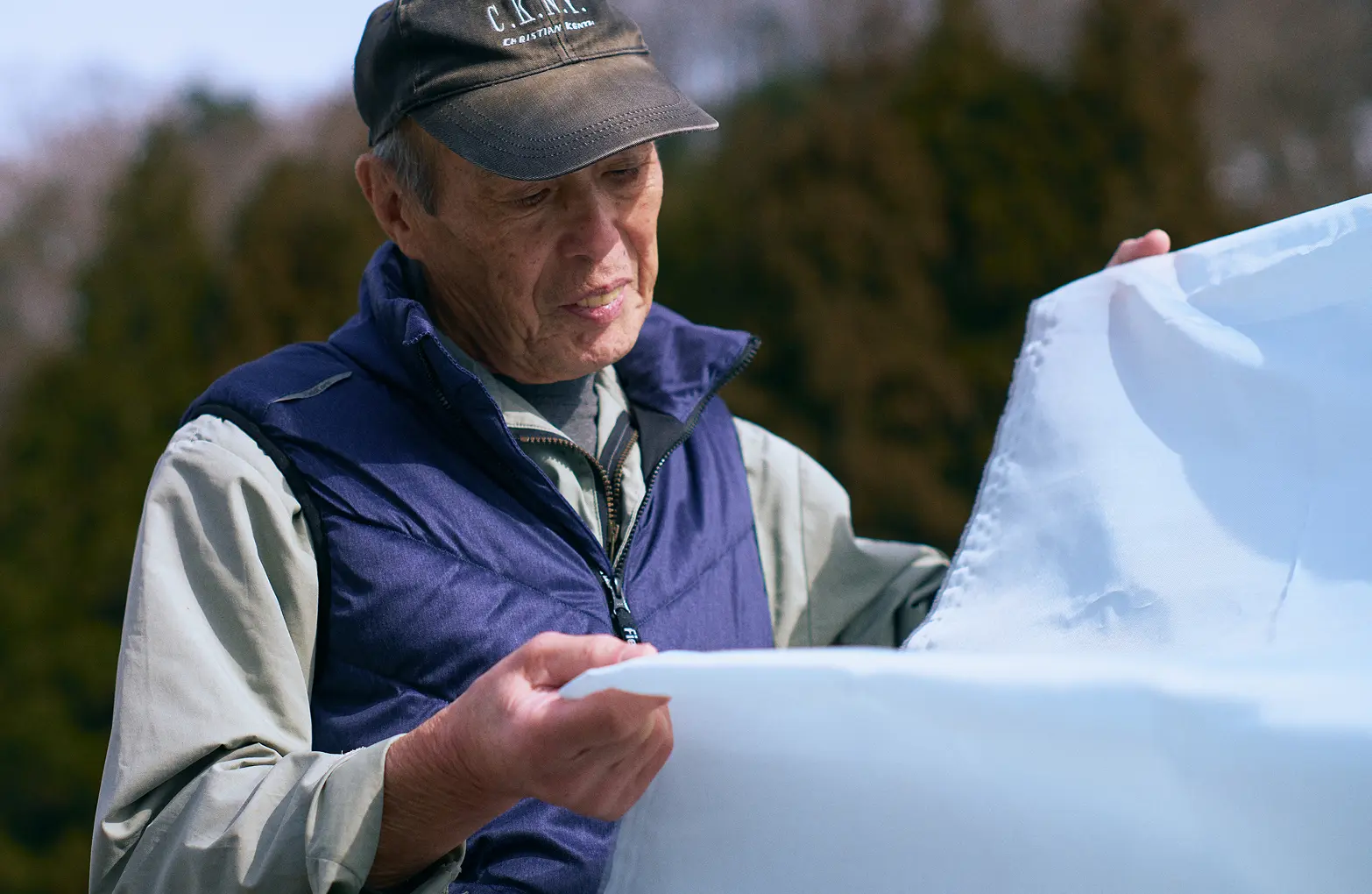
remains optimistic. "I want to try seed planting in spring, but the low temperatures make it
difficult for the plants to germinate. The net made with SOLAMENT™ can generate its own heat,
so by laying this out, I think I may be able to raise the ground temperature and successfully
sow in the spring. I have the responsibility of preserving a vegetable that has been around
for more than 150 years, so I really hope to find good cultivation methods and pass it on to
future generations."
A Wish to Grow and Share Sugihashi Akakanba Here in This Region
In order to preserve the Sugihashi Akakanba, it's important to not only grow the crop, but
to have more people eat it and enjoy the outstanding flavor for themselves. Yamaguchi
keeps this in mind while running his soba (buckwheat noodles) shop—another business
of his in addition to turnip farming. He actually opened this handmade soba shop 15 years
before he began cultivating Sugihashi Akakanba. Including his initial period as a trainee,
Yamaguchi has been making buckwheat noodles for more than four decades. His shop has
garnered a massive fan following, with customers visiting Sugihashi from all over Japan
and even other countries just to try the noodles. The "Sakura Chirashi Gozen" meal set,
which includes Echizen soba made using buckwheat flour native to Fukui Prefecture and
chirashi-zushi (raw fish and other ingredients scattered over rice) containing Sugihashi
Akakanba is a popular menu.
"I'm always so happy when people tell me, 'That tasted great! I'll be sure to come again.' It
motivates me to try for even tastier Sugihashi Akakanba and soba, and has been an increasingly
strong driving force behind everything I do," says Yamaguchi. "Even though I started my noodle
shop and turnip growing operations as separate businesses, they naturally came together. Nowadays,
I see them as one single operation, not two, and both are essential in my mind."
The biggest motivation behind Yamaguchi's endeavors is his love for Sugihashi, the place where he was born and raised. Ever since his youth, he has had a strong desire to further vitalize his hometown. During his years as a white-collar worker, he traveled to and lived in various parts of the country, but he never had any real desire to be anywhere except Sugihashi. "The Sugihashi Akakanba has more than 150 years of history here, and the environment is perfectly suited to its cultivation. That's why this turnip will never really leave Sugihashi. Therefore, it's my hope that new people will come along and take in the culture and history of Sugihashi itself together with that of the turnip, so that they can take over as growers and continue the tradition."
Interview&Text / Sachiko Kawase
Photo / Yuta Nishida

Farmer
Kazuo Yamaguchi
Born in 1947 in Sugihashi, Tsuruga City, Fukui Prefecture, Yamaguchi previously worked in a metalworking company while learning soba (buckwheat noodles) making on his own. After leaving the company, he opened his noodle shop in the hope that it would function as a sort of community salon for people of the local region. He founded the Sugihashi Akakanba Growers Association in 2010 and became its head, handling everything from Sugihashi Akakanba production through to processing and product sales. Today, he continues to grow the turnip while searching far and wide for successors to continue the tradition.
References
warmerwarmer, Beautiful Vegetables of Japan (Orange Page); Takashi Aoba, Lineages of Native Vegetables (Hosei University Press); "Let's Eat Fukui's Hundred-Year-Old Vegetables," Fukui Prefecture website; Fukui Prefecture Wakasa Bay Tourism Federation website; "The Sugihashi Red Turnip," Umekiki; "Lessons From Grandma and Grandpa," The Chunichi Shimbun, 31 Jan. 2021
Share this page


