Voice of Farmers
A New Chapter Begins for the Future of the Elusive
Waseda Myoga
Waseda Myoga
Myoga, or Japanese ginger (Zingiber mioga), traces its roots back to Southeast Asia. It
made its way to Japan in ancient times and established itself as a naturalized plant that
grows wild. It grows best in soil with both good water retention and drainage properties.
During the Edo Period (1603–1868), the Waseda district of present-day Tokyo was a
well-established myoga cultivation region—it was even featured in the 1828 Shinpen Musashi
Fudoki-ko (New edition gazetteer for Musashi) issued by the ruling Tokugawa government.
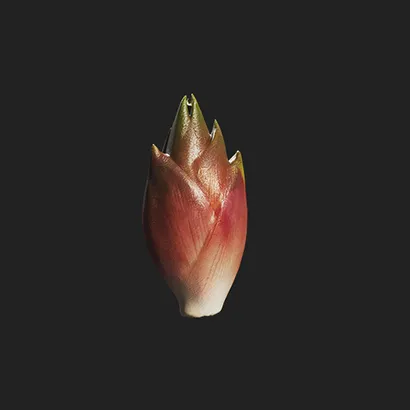
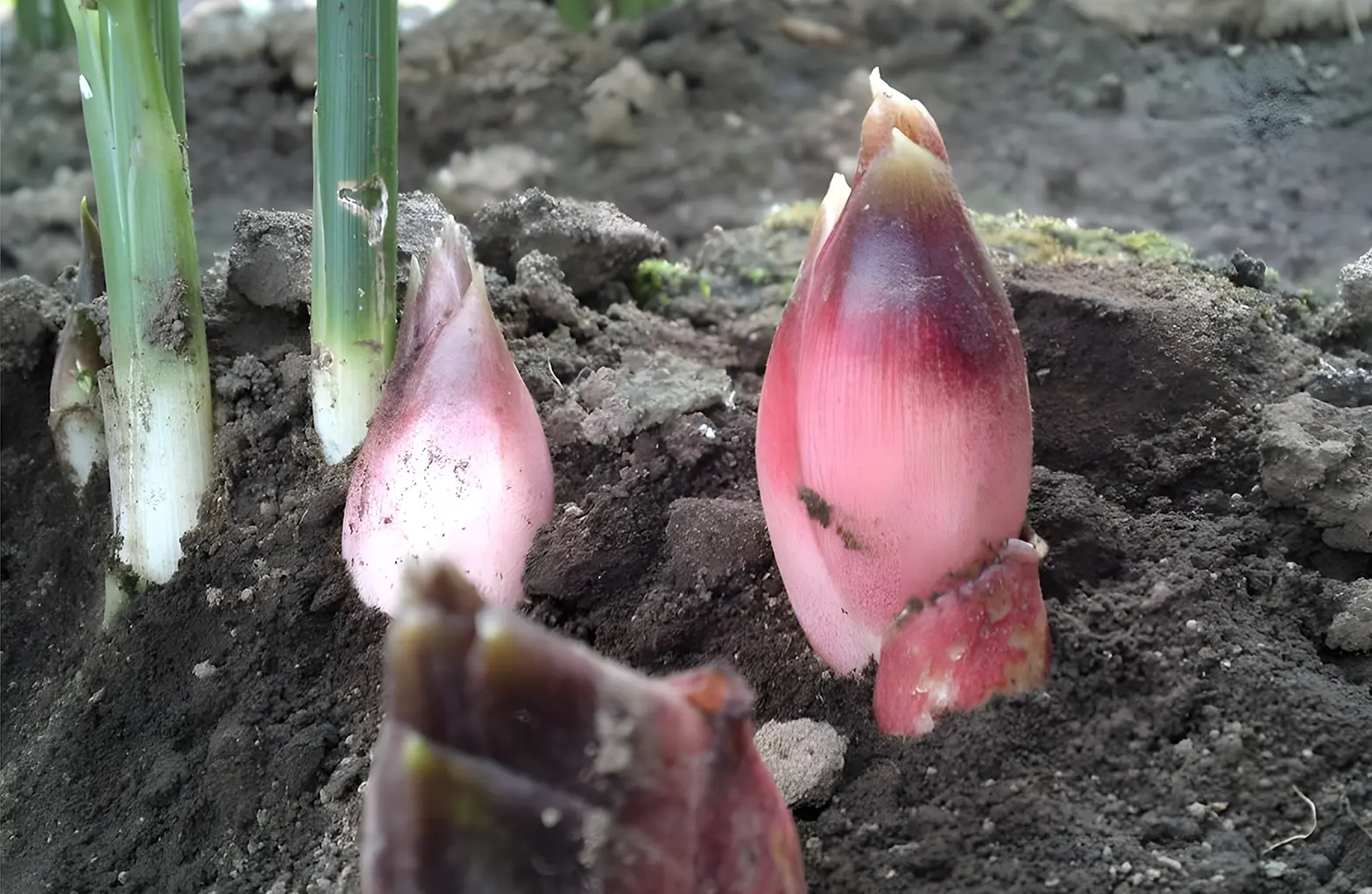
Waseda Myoga is characterized by its large-sized rhizomes (edible portions of the stem),
excellent aromatic properties, and beautiful red coloring.
This ginger was widely grown in the late Edo Period, but from the Meiji Period (1868–1912) onward,
urban development—including schools and housing—led to a steady decline in myoga fields, and
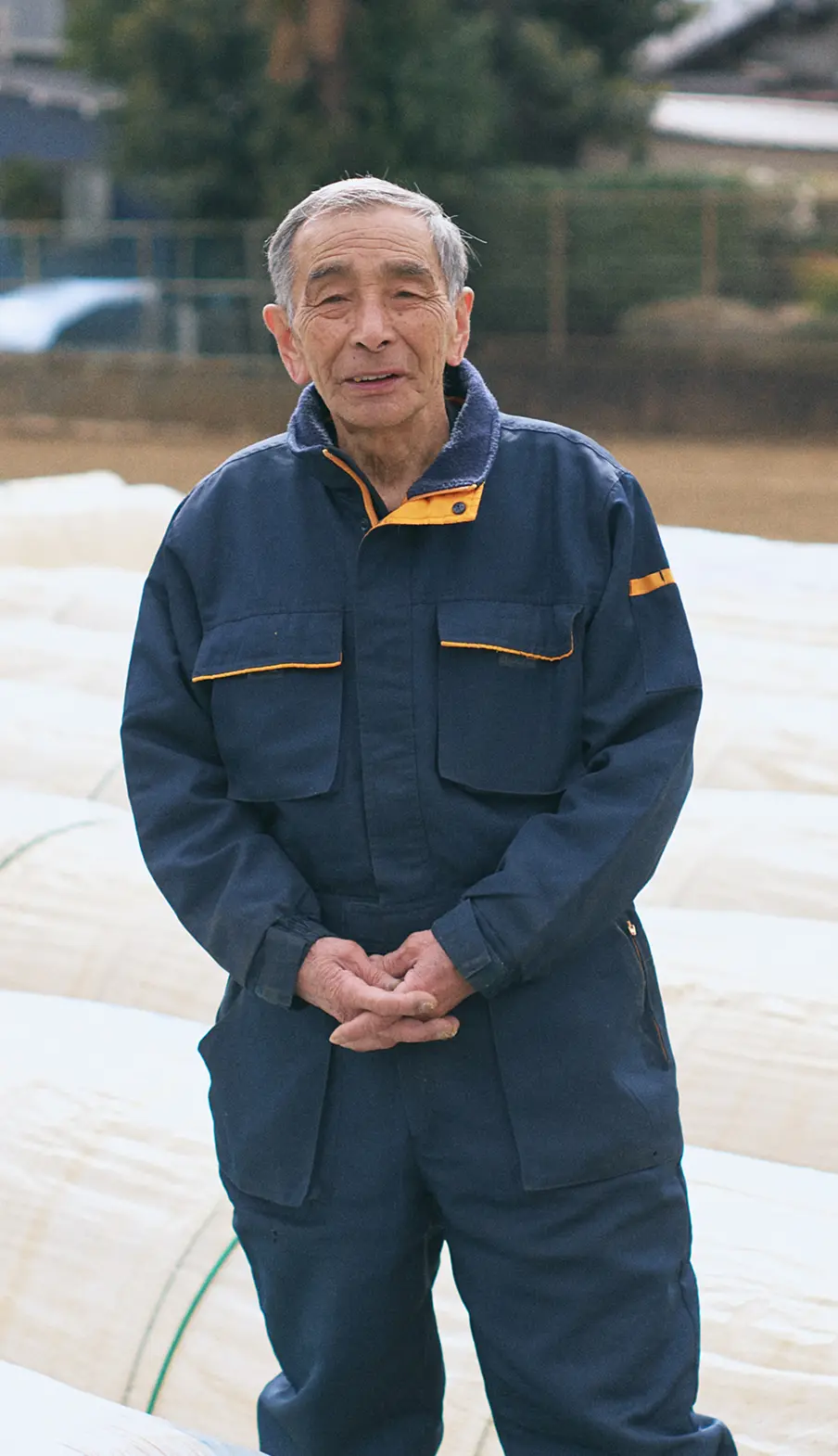
it eventually became a elusive variety. In 2010, Kimio Inoguchi (pictured), a farmer from Nerima,
Tokyo, was approached by Michishige Otake of the Edo–Tokyo Traditional Vegetable Research Association
to search for wild Waseda myoga. The plants were eventually found in the garden of a historic
family home. Inoguchi then revived its cultivation. Today, Waseda myoga is being grown on Miyakejima
Island.
Many traditional vegetables around Japan are named after their growing location, but no vegetable growing-region name carries anywhere near the level of nationwide fame as that given to this myoga. It is named after the Waseda district of Shinjuku Ward, Tokyo, which centers on Waseda University and includes various shopping arcades and residential neighborhoods. It was once the growing region for Waseda Myoga, a prosperous crop during the Edo Period and a food that graced the tables of shogunate family. With the explosion of area housing development during the Meiji Period, however, both the myoga fields and the plants themselves gradually disappeared.
The Waseda Myoga That Quietly Survived in the Wild
On August 22, 2010, news broke that the elusive Waseda myoga had been rediscovered. The
discovery was made by the “Waseda Myoga Search Team,” formed at the initiative of
Michishige Otake, head of the Edo–Tokyo Traditional Vegetable Research Association. It was
Kimio Inoguchi, a farmer from Nerima, Tokyo, whose family has farmed for generations, who
found the myoga growing wild in the garden of a historic home in Waseda.
Otake elaborates, "Myoga doesn’t grow from seeds, but from underground rhizomes. Once planted,
it will keep growing unless it’s removed. So we thought the rhizomes of Waseda myoga once cultivated
here might still remain in the area." Adds Inoguchi, "My grandfather used to tell me that Waseda
was once a major myoga-growing region, so I’d always been curious to see it for myself. When
I found it, I was honestly surprised—‘It really existed!’ And I felt a strong desire to bring
it back into cultivation."
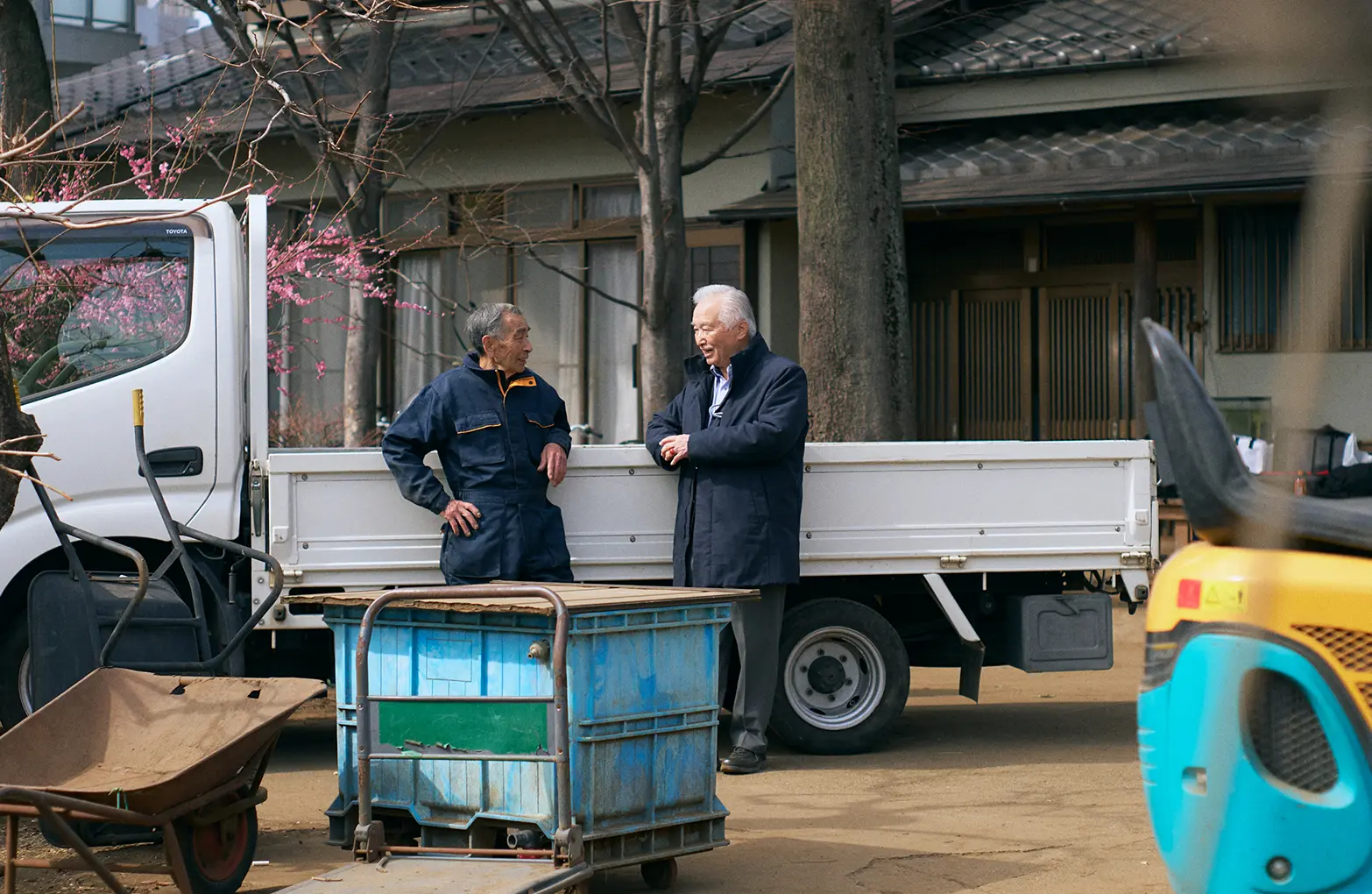
Together, they are working to revive Waseda Myoga and sustain its production.
Inoguchi received rhizomes of Waseda myoga from the house where it was discovered and
began cultivating it himself. Some were also shared with eight other farmers growing
Edo–Tokyo traditional vegetables. However, only Inoguchi was able to harvest a crop
suitable for market.
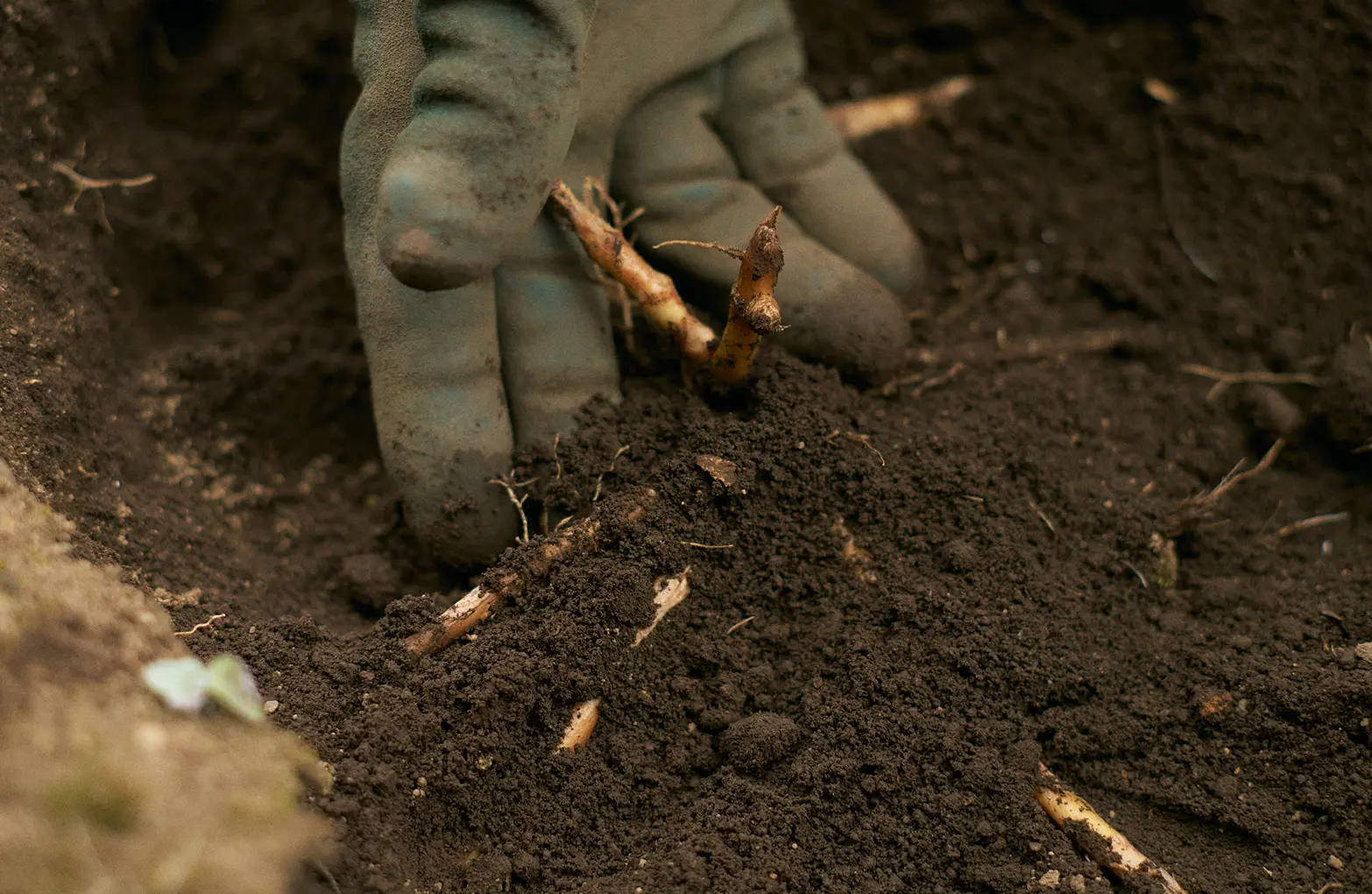
Inoguchi recalls, "The plants had become weak. They’d been left growing for so long that the
rhizomes were overcrowded and tangled. My family had grown myoga until around 2002, so I knew
how to handle it. In the first year, I focused on restoring the weakened rootstocks. Then in
the second year, I was finally able to harvest the kind of myoga I’d heard about, with plump,
rounded buds and a deep red color (the edible flower buds). I felt relieved. I remember thinking,
‘So this is Waseda myoga.’ And when I tasted it, it was really good."
Awareness Rose Through the Efforts of Growers and the Interest of Consumers
Myoga is typically known as a summer condiment, but Waseda myoga is a late-season variety,
harvested in September and October. Its optimal growing temperature is around 25°C, and it
prefers shaded conditions with well-drained yet moisture-retentive soil. "If it finds a
place it likes, it can survive there," says Inoguchi. That also means it requires some
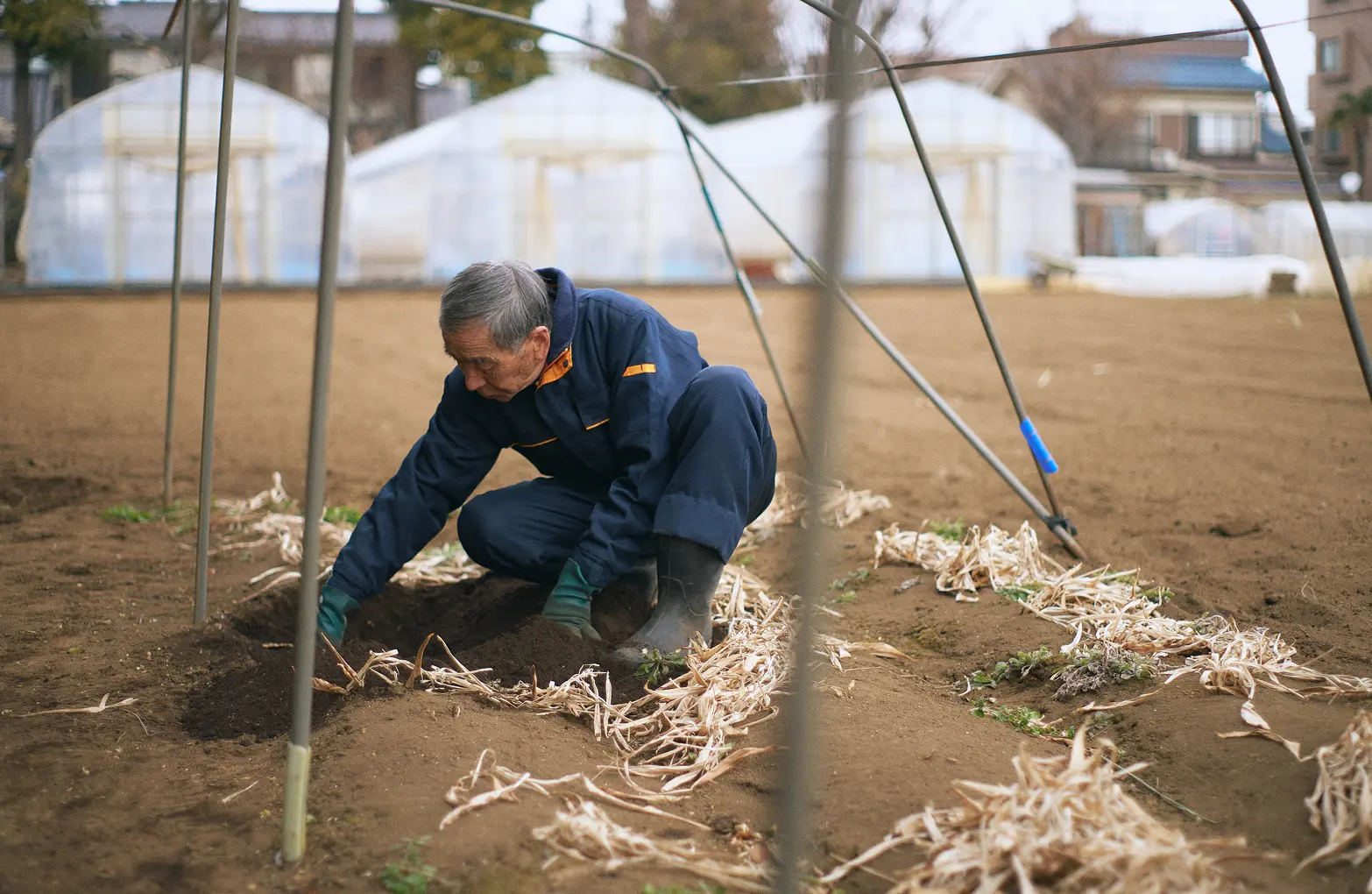
care to cultivate it in a field. Inoguchi has continued growing Waseda myoga by setting up
shade covers, rotating planting locations each year to avoid continuous cropping issues,
and making other careful adjustments.
Inoguchi says, "The challenge with traditional vegetables isn’t just growing them. It’s whether
people get to know them and accept them. Once people try them, they can tell they’re different—and
that they taste great. Thanks to everyone’s support, Waseda myoga has become a popular ingredient.
Its appearance really stands out, and people in the restaurant industry often tell me, ‘This
is great!’"
Otake says, "Shortly after Inoguchi began cultivating Waseda myoga, local shopping streets in
Waseda launched an event where people could enjoy autumn bonito from Kesennuma with Waseda myoga,
as part of fundraising efforts following the Tohoku earthquake and tsunami. It was also served
in school lunches in Shinjuku, such as myoga simmered with egg, creating a lot of excitement
around eating it. Thanks to these efforts, awareness of Waseda myoga gradually spread, starting
in the local area."
From Tokyo’s Sweltering Heat to the Sea Breezes of Miyakejima: Waseda Myoga’s Journey Across the Sea
Shipments to Toyosu Market eventually began, marking a step toward nationwide
distribution. However, by 2024, Waseda myoga had disappeared from the market. The reason
is extreme heat.
Inoguchi says, "I tried all kinds of things, but once temperatures climbed above 30℃, even 35℃,
there was nothing I could do. The myoga must have been struggling too. I used to harvest around
20 buds from each plant, but as the heat intensified, the plants weakened, and now I can only
get about five to ten. Tokyo is a city of asphalt and concrete, and it traps heat from air conditioners.
In the past, cool sea breezes from Tokyo Bay would reach Nerima by evening. But with all the
urban development, the wind no longer flows through, and temperatures don’t drop even at night.
I started to feel that growing it in Tokyo was no longer possible."
Once lost to urbanization, Waseda myoga now faces the risk of extinction again due to continued
urban development and rising temperatures. In response to Inoguchi and Otake’s determination
not to let the painstakingly revived crop vanish once more, the next step was to begin cultivating
it on Miyakejima Island.
Located about 180 kilometers south of Tokyo, Miyakejima is one of the city’s remote islands.
With strong coastal winds and well-drained volcanic soil, it offered promising conditions for
cultivation. In the spring of 2025, thirty rootstocks from Inoguchi’s farm were transported
to the island.
Inoguchi says, "I believe Waseda myoga is a traditional vegetable worth preserving for future
generations. But if things continue this way, it could disappear again. So if there’s a better
place to grow it—and people who are willing to care for it properly—I’m happy to pass it on.
Even if it’s grown outside Waseda, it’s still Waseda myoga. The farmers on Miyakejima often
call me for advice, and I think they’re doing a great job. I just hope they can grow it well."
Ensuring Survival Both in Its New Home and in Its Place of Origin
When we visited Inoguchi’s farm in Nerima in February, around 120 Waseda myoga plants were
waiting for the sprouting season.
Inoguchi says, "I’ve shared some rootstocks with Miyakejima, but it’s also important for me
to keep growing them here so they don’t become a elusive variety again. Shipping them may be
difficult, but I don’t want to give up and regret it later. So I’m doing my best to keep cultivating
them despite the conditions. That’s why I have modest hopes for new materials like this."
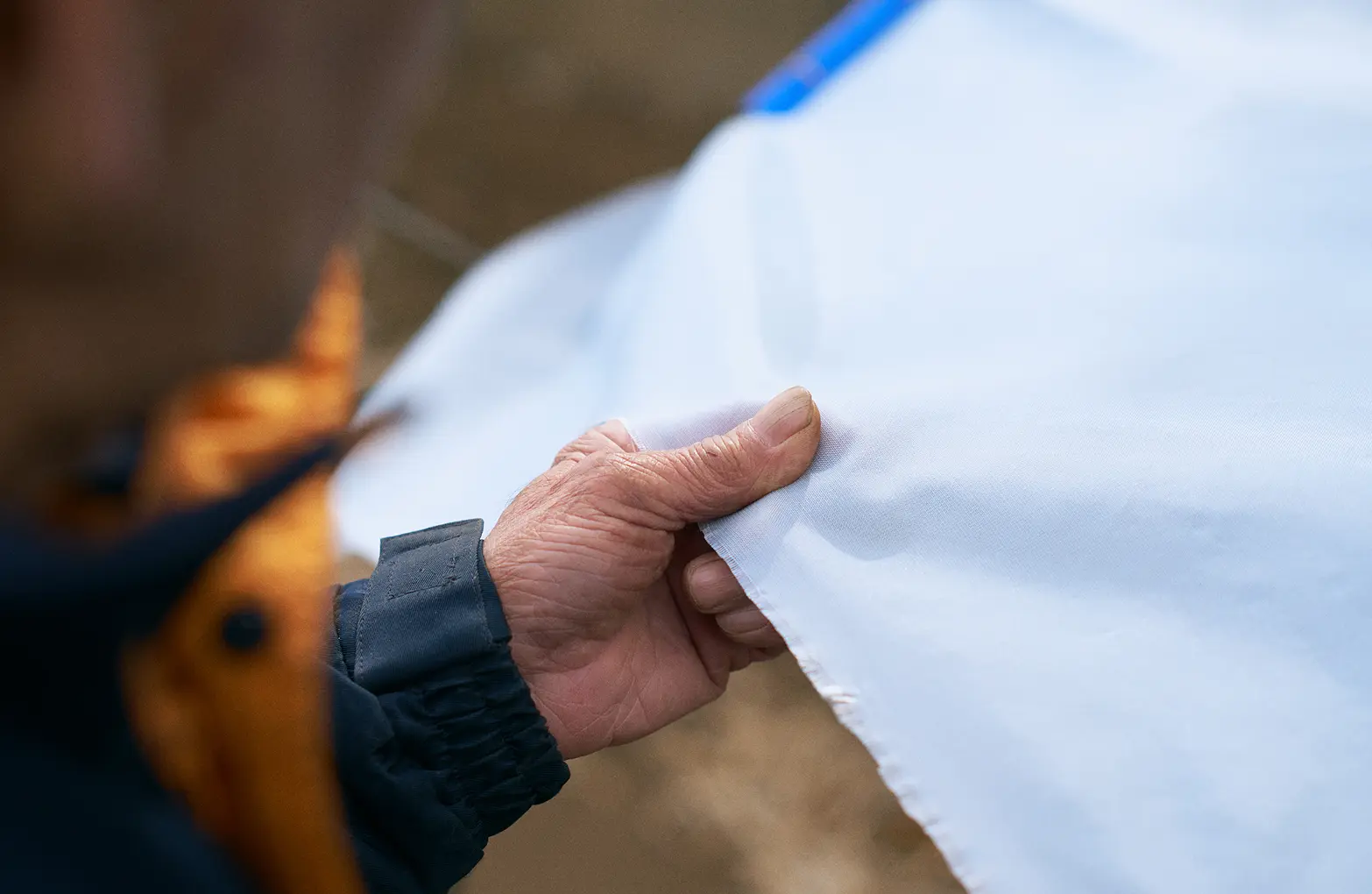
So says Inoguchi in regard to the shade net made with SOLAMENT™ he has procured. SOLAMENT™ technology
absorbs near-infrared light from sunlight to provide the heat-blocking effect, and Inoguchi
has decided to try using it with this year's crop.
"If I set up these nets above my myoga field, I can greatly reduce the temperatures underneath.
If I use this material together with irrigation, it might even be possible to resume full-scale
Waseda Myoga production here once again. Having started this work, I really want to keep going.
I hope that one day I’ll be able to send those plump, red Waseda Myoga out into the world once
again."
Interview&Text / Sachiko Kawase
Photo / Yuta Nishida

Farmer
Kimio Inoguchi
Born in Nerima City, Tokyo in 1948, Inoguchi is the third generation of farmers to run his family farm (also in Nerima). Known for his expertise in cabbage farming, Inoguchi has won the Minister of Agriculture, Forestry and Fisheries Award on multiple occasions for his cabbages. He also grows other vegetables native to the region, including Senju Green Onions and Kosegi Late-Season Komatsuna (Japanese mustard spinach). After discovering some Waseda Myoga (Japanese ginger) plants in 2010, he began to raise and grow them himself. Currently, Inoguchi continues to preserve the farming traditions of his family in Tokyo together with his son Yukio, who represents the fourth generation of Inoguchi farmers.
References
warmerwarmer, Beautiful Vegetables of Japan (Orange Page); Takashi Aoba, Lineages of Native Vegetables (Hosei University Press); Michishige Otake, Stories of Edo–Tokyo Vegetables (Rural Culture Association Japan); Michishige Otake, The Story of Edo–Tokyo Vegetables (Heibonsha Shinsho); JA Tokyo Central, “About Edo–Tokyo Vegetables”; JA Tokyo Central, “Talking about Edo–Tokyo Vegetables”; Michishige Otake, “Edo–Tokyo Vegetable News: A Blog on Traditional Vegetables”; Mainichi Shimbun, “Waseda Myoga Once Served to the Shogun: Edo Stories through Traditional Vegetables” (March 21, 2022).
Share this page


